 ultimate-guide
Automated Gate Maintenance and Repair Guide
Table of Contents
- Why Regular Automated Gate Maintenance Matters
- Essential Tools and Safety Equipment You'll Need
- Step-by-Step Automated Gate Maintenance Checklist
- Electric Gate Motor Troubleshooting
- Automated Gate Safety Standards and Compliance
- Professional Gate Servicing Frequency and Costs
- When to Call a Professional vs. DIY Repairs
- Preventative Maintenance to Avoid Costly Repairs
- Frequently Asked Questions
Last Updated: October 4, 2026
Why Regular Automated Gate Maintenance Matters
Automated gates are complex systems combining mechanical, electrical, and safety components. Regular automated gate maintenance prevents costly breakdowns, extends equipment lifespan, and ensures your gate operates safely and reliably.
A simple maintenance routine catches problems before they become expensive repairs. A gate that stops responding to remotes, moves slowly, or makes grinding noises is signalling wear that's easy to address now but catastrophic if ignored.
Beyond functionality, regular maintenance is a legal requirement. Automated gates must comply with safety standards that mandate regular testing of safety sensors, limit switches, and emergency release mechanisms.
Most property owners treat gate maintenance as something to tackle "eventually." That mindset is expensive. A quarterly inspection takes a few hours and prevents months of access problems and safety vulnerabilities.
Essential Tools and Safety Equipment You'll Need
Before you start any automated gate maintenance work, gather the right tools. Using improper equipment wastes time and risks damage to sensitive components.
You'll need basic hand tools: adjustable wrenches (10mm to 19mm), screwdrivers (Phillips and flathead), a socket set, pliers, and a rubber mallet for gentle adjustments.
Diagnostic tools are essential: a multimeter to check electrical connections and voltage, a flashlight or headlamp for inspecting dark areas, and a small mirror to see behind components.
Safety equipment is non-negotiable. Wear safety glasses when working near moving parts and hydraulic lines. Use work gloves to protect your hands from sharp edges and chemical lubricants.
Document everything with a notebook or phone camera. Photograph the current state of hinges, tracks, and electrical connections before you start work.
Step-by-Step Automated Gate Maintenance Checklist
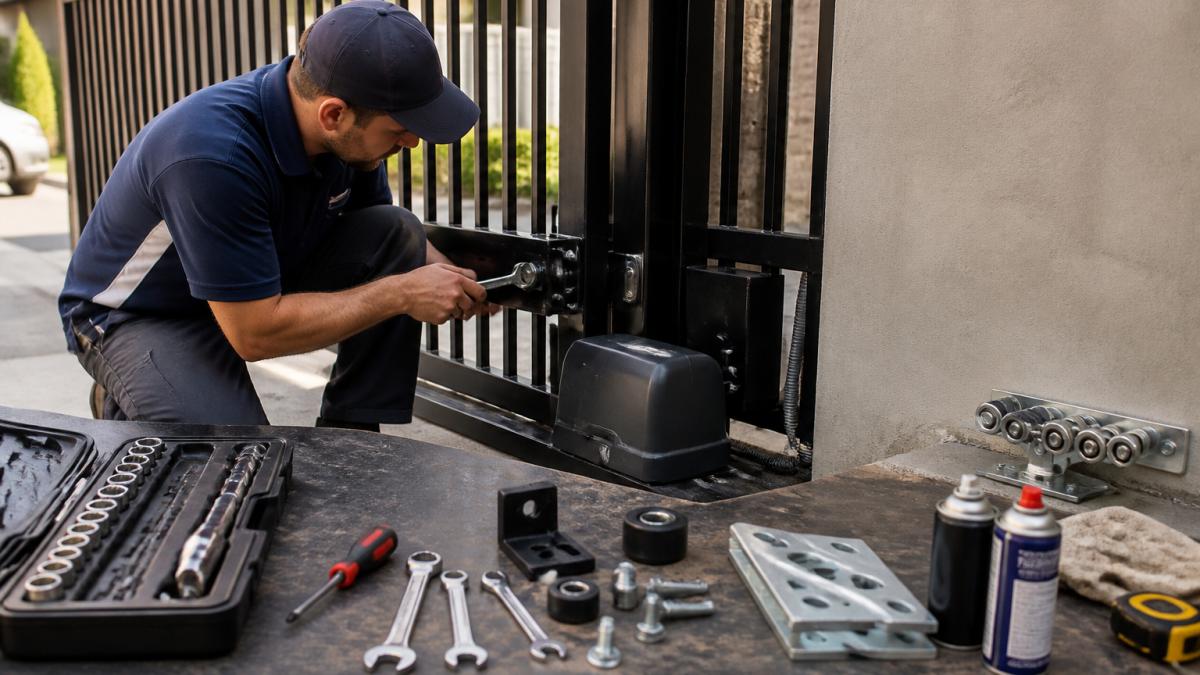
A systematic approach prevents you from missing critical components. Work through each step methodically, taking notes as you go.
Visual Inspection and Alignment
Start with a complete visual inspection of the gate structure. Look for rust, cracks, bent components, or visible wear on the gate frame, hinges, and arms. Check gate alignment by opening and closing it slowly, the gate should move smoothly without scraping against the posts or ground.
Misalignment often causes the gate motor to work harder than necessary, accelerating wear. If the gate drags or binds, note which section catches. This tells you whether the issue is a bent frame, settling posts, or worn hinges. Take photographs from multiple angles to document the current condition.
Inspect all visible fasteners. Bolts and brackets loosen gradually from vibration and thermal expansion. A gate that moves hundreds of times daily experiences constant stress on connection points.
Lubrication of Moving Parts
Hinges, wheels, and arm pivot points need regular lubrication to reduce friction and prevent corrosion. Apply multipurpose lubricant spray to hinge pins, paying special attention to the top and bottom hinges where most of the gate's weight concentrates.
For sliding gates, lubricate the track wheels and the track itself. Use silicone-based lubricant on wheels to avoid attracting dirt. Wipe excess lubricant away, buildup attracts dust and debris that grinds against moving parts.
Don't overlook the gate operator's moving components. If your gate uses a chain drive or belt drive system, check the manufacturer's guidance on lubrication intervals. Over-lubrication is as problematic as under-lubrication, excess lubricant becomes a dirt magnet.
Cleaning Tracks and Removing Debris
Debris accumulation is the silent killer of automated gates. Leaves, dirt, gravel, and organic material jam wheels and prevent smooth operation. For sliding gates, clean the track thoroughly with a brush and vacuum, then wipe with a dry cloth.
For swing gates, check the ground clearance as the gate moves. Grass, gravel, or soil buildup under the swing path will catch the gate arm and force the motor to work against resistance. Clear this area regularly.
Inspect the track for damage, dents, warping, or separation. A damaged track forces wheels to work at an angle, accelerating wear and creating noise. Minor dents can sometimes be gently tapped out; significant damage requires professional track replacement.
Testing Safety Sensors and Photo-Eyes
Safety sensors are mandatory on automated gates. These photo-eye beams detect obstructions and signal the gate to stop or reverse. Test them monthly by placing an object (a piece of wood or cardboard) in the beam path while the gate is closing. The gate should stop immediately.
Clean the sensor lenses with a soft, lint-free cloth. Dust, spider webs, and water droplets on the lenses prevent the beam from transmitting properly. Misaligned sensors won't detect obstructions reliably.
Check that both the transmitter and receiver are functioning. Most systems have indicator lights, a steady light means the beam is unobstructed. If the light flickers or is off, realign the sensors or check for debris blocking the beam.
Checking Control Board and Electrical Connections
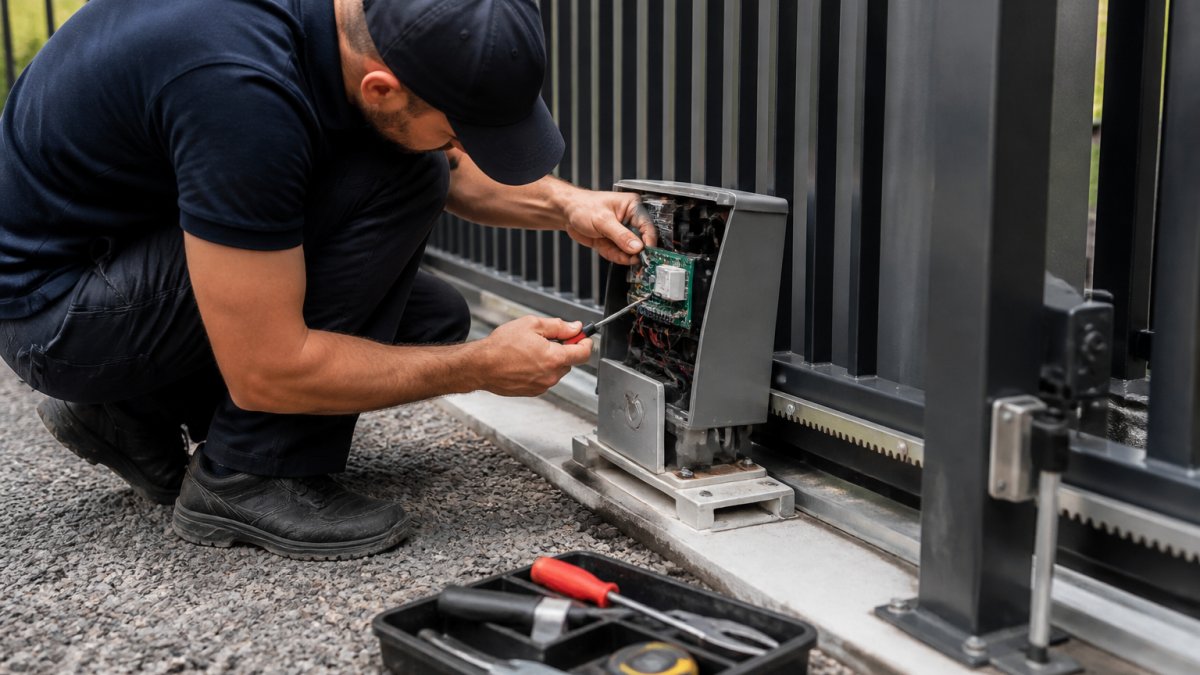
The control board is the gate system's brain. Inspect all visible connections for corrosion, loose terminals, or damaged wires. Oxidised connections appear green or white and should be cleaned with a soft brush.
Use a multimeter to check voltage at the main terminals. Compare your reading to the manufacturer's specifications, most systems run at 12V or 24V DC. Low voltage indicates a failing power supply or loose connection.
Check that all safety devices are wired correctly. Limit switches, safety sensors, and manual release buttons must be connected to the control board. A loose wire in the safety circuit disables safety features without obvious warning.
Testing Manual Release Mode
Every automated gate must have a manual release mechanism that allows the gate to be opened by hand if power fails. Test this monthly by disengaging the motor (usually a lever or pin on the motor housing) and attempting to push or pull the gate open.
The gate should move with reasonable effort, not freely, but not requiring excessive force. If it's stuck or requires extreme force, the brake mechanism may be failing or the hinges may need lubrication.
After testing, re-engage the motor and verify that the gate operates normally. A manual release that's difficult to use becomes a liability in an emergency.
Tightening Bolts, Brackets, and Hardware
Vibration from gate movement loosens fasteners gradually. Use your socket set to check every visible bolt and bracket. Start with low torque and gradually increase until snug, don't over-tighten, which can strip threads or crack components.
Pay special attention to the hinges, which bear the gate's weight and experience constant stress. Check the bolts connecting the gate frame to the hinges, and the bolts connecting the hinges to the posts.
For sliding gates, inspect the wheel mounting bolts and the track support brackets. Loose wheels cause misalignment and accelerate wear.
Electric Gate Motor Troubleshooting
The gate motor is the system's power source. Common issues include slow operation, intermittent failures, and complete loss of function.
If the gate moves slowly, check the motor's power supply voltage first. Low voltage indicates a failing transformer or loose connection. Next, inspect for mechanical resistance, a binding track, misaligned gate, or seized hinge will force the motor to work harder and move slower.
If the gate stops mid-cycle, the issue is usually a safety sensor detecting an obstruction or a limit switch not triggering properly. Clean the sensors and check their alignment.
For complete motor failure, verify that power is reaching the control board. Check the main breaker and any inline fuses. If power is present but the motor won't start, the control board may have failed and will require professional replacement.
Automated Gate Safety Standards and Compliance
In Australia, automated gates must comply with safety standards set out in AS/NZS 60335-1 and AS/NZS 60335-2-103, which govern safety of household and similar electrical appliances. These standards mandate that gates include obstruction detection, emergency release mechanisms, and regular safety testing.
Your gate must have functioning safety sensors that stop the gate if an object blocks its path. The sensors must be tested monthly to ensure they respond reliably.
An accessible manual release must be clearly marked and functional. In the event of power failure, anyone should be able to open the gate by hand using the manual release mechanism.
Regular maintenance records demonstrate compliance. Keep a log of inspection dates, findings, and repairs performed. This documentation is invaluable if a safety incident occurs or if you're questioned about your maintenance practices.
Professional Gate Servicing Frequency and Costs
Most automated gates benefit from professional servicing. Seasonal changes in temperature and moisture affect gate operation and reveal issues that may not be obvious during routine maintenance.
Professional servicing includes comprehensive testing of all safety systems, lubrication of all moving parts, electrical diagnostics, and adjustment of limit switches and safety sensors. A qualified technician can identify wear patterns you might miss and recommend preventative repairs before failures occur.
The cost of professional servicing varies based on gate size, system complexity, and your location. Contact AK FENCING VIC PTY LTD for a free quote tailored to your specific gate system and maintenance needs.
When to Call a Professional vs. DIY Repairs
Basic maintenance, cleaning, lubrication, bolt tightening, and visual inspection, is well within reach for most property owners with basic tools and careful attention to safety.
Never attempt to repair hydraulic systems yourself. Hydraulic fluid is under extreme pressure and can cause serious injury. Similarly, if the gate motor is failing, professional replacement is essential, improper installation can create safety hazards.
When in doubt, consult the manufacturer's manual or contact a qualified gate technician. The cost of professional diagnosis is far less than the cost of a failed repair that damages expensive components.
Preventative Maintenance to Avoid Costly Repairs
Preventative maintenance is the most cost-effective approach to automated gate ownership.
Establish a maintenance schedule: inspect hinges and moving parts, clean tracks and sensors, check electrical connections, and arrange professional servicing. Document everything in a log.
Monitor your gate's behaviour closely. Changes in speed, unusual noises, hesitation during operation, or inconsistent sensor response are early warnings of developing problems. Address these immediately rather than waiting for a complete failure.
Protect your gate from environmental stress. Keep gutters and drainage clear so water doesn't pool around the gate posts. Trim vegetation that might encroach on the gate's swing path or block sensor beams.
By treating automated gate maintenance as an ongoing responsibility rather than an occasional task, you'll extend equipment life, maintain safety compliance, and avoid the frustration and expense of unexpected failures. AK FENCING VIC PTY LTD can help with professional servicing and repairs when you need expert support.
Frequently Asked Questions
How often should automated gates be serviced?
Most automated gates benefit from professional servicing. Regular automated gate maintenance prevents wear on the motor, gearbox, and safety sensors. Between professional visits, perform visual inspections and lubricate moving parts. Your gate manual or installer should specify the exact frequency for your system.
What safety standards apply to automated gates in Australia?
Automated gates must comply with AS/NZS 60335 electrical safety standards and relevant building codes. These standards govern motor safety, electrical connections, obstruction detection, and emergency manual release functionality. Safety sensors and photo-eyes must be certified and regularly tested. Non-compliance can void insurance and create liability risks. Always verify your installation meets current standards, and consult your local council for any additional requirements specific to your property.
Can I perform DIY maintenance on my electric gate?
Basic DIY gate maintenance checklist tasks are safe: visual inspection, debris removal, lubricating hinges and tracks, and testing manual release. Avoid electrical work, control board adjustments, or sensor recalibration unless you're qualified. High-voltage components pose electrocution risks. If troubleshooting reveals electrical faults, stop and contact a licensed professional. Document what you've checked so professionals can focus on more complex issues.
What should I do if my gate motor won't open?
Start with basic checks: verify power is on, test the manual release handle, and check for visible obstructions in the track or arm path. Inspect the safety sensors for dirt or misalignment. Listen for unusual motor sounds. If the control board shows error lights, consult your manual. For electric gate motor troubleshooting beyond these steps, stop and call a professional to avoid damaging internal components or creating safety hazards.
Regular automated gate maintenance protects your property's security, ensures safe operation, and prevents costly emergency repairs. Whether you're handling routine maintenance yourself or scheduling professional servicing, the key is consistency. AK FENCING VIC PTY LTD offers comprehensive gate servicing and repair backed by our workmanship guarantee. Contact us for a free quote and let our fully licensed and insured team keep your automated gate system operating reliably year-round.