 How-to
Avoiding Hidden Costs in Fencing Quotes: A 2026 Guide
Table of Contents
- Why Hidden Costs Appear in Fencing Quotes
- Create a Fencing Quote Comparison Checklist
- What to Include in a Fencing Scope of Works
- Vertical Blade Fence Installation Costs: What Affects the Price
- Permits, Council Approval, and Compliance Costs
- Request a Fixed-Price Quote with a Written Contract
- Frequently Asked Questions
Last Updated: October 3, 2026
Why Hidden Costs Appear in Fencing Quotes
Hidden costs in fencing quotes frustrate homeowners when unexpected ground conditions, utility strikes, or material changes push bills higher.
The real problem isn't dishonesty, it's vague scope. When a quote doesn't spell out exactly what's included, contractors interpret the job differently as they go.
Avoiding hidden costs in fencing quotes comes down to one thing: transparency. You need to know what you're paying for before the work starts.
Create a Fencing Quote Comparison Checklist
Getting multiple quotes is essential, but comparing them properly matters more. A lower quote often means something's been left out.
What to Look for in Each Quote
Every quote should break down labour, materials, site preparation, and contingencies separately. Ask for a detailed breakdown if it doesn't.
Check whether the quote includes:
- Site preparation and ground clearing
- Concrete footings or post installation method
- Labour hours and installation timeline
- Material grade and specifications
- Waste removal and disposal
- Permits and council approval costs
- Gate hardware and automation (if applicable)
- Warranty terms and post-installation support
Red Flag Line Items That Signal Extra Charges
Watch for these red flags:
- "Subject to site conditions" - code for potential extra charges
- "Contingency to be confirmed" - vague language delaying clarity
- "Estimated labour" without a fixed rate - open-ended costs
- "Material wastage included" without a percentage - normal wastage is 5%, not 15%
- "Permits to be arranged" with no cost - should be estimated upfront
- "Final cost depends on final measurements" - measurements should be locked in before quotes
What to Include in a Fencing Scope of Works
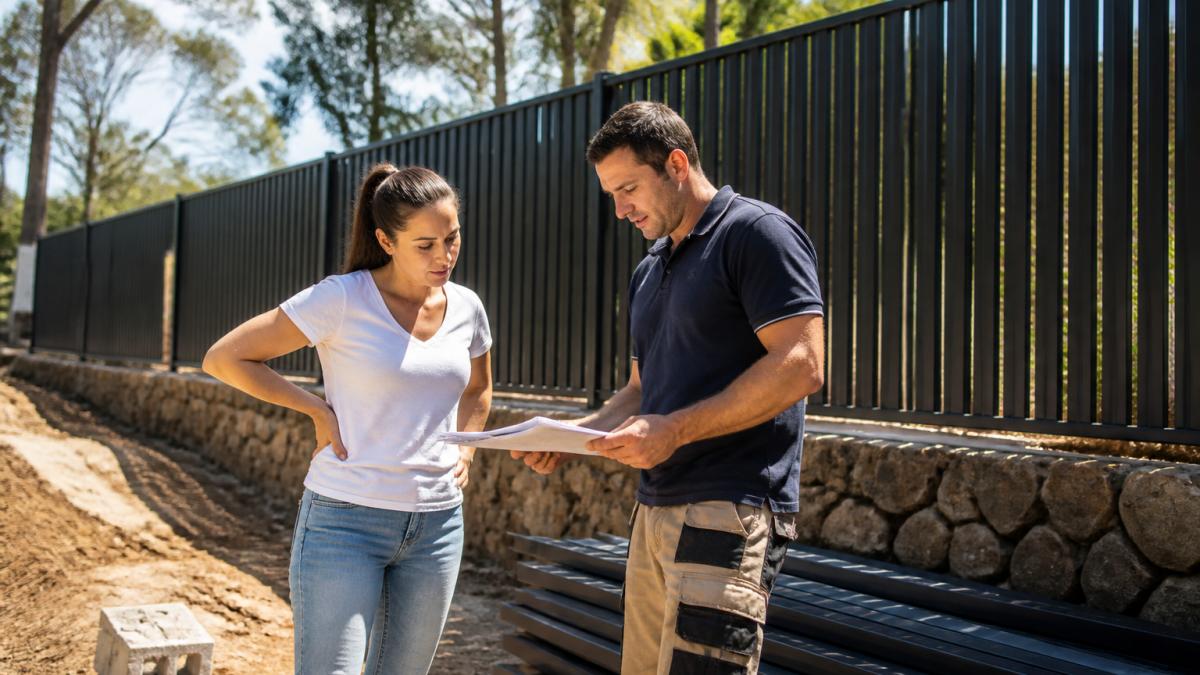
A scope of work is your protection, a written agreement defining what the contractor will do, what materials they'll use, and what you'll pay.
Site Preparation and Ground Conditions
Ground preparation often causes cost surprises. Poor soil won't hold posts; steep terrain increases installation time and cost.
Your scope should specify:
- Soil type and condition, Clay, sandy, rocky, or waterlogged soil each require different approaches
- Terrain grade, Flat ground costs less than steep slopes
- Existing obstacles, Trees, rocks, or utility lines that need working around
- Excavation depth, Post holes need to go deep enough for structural integrity
- Ground stabilisation method, Concrete footings, gravel, or compacted soil
If the site has poor drainage or unstable soil, the scope should specify concrete footings to prevent contractors from cutting corners later.
For vertical blade fencing, ground preparation is critical. Weak soil causes sagging or leaning within a year. A good scope specifies concrete depth and post spacing based on soil type.
Material Grade and Specifications
Material quality varies widely. A quote saying "Colorbond fencing" is vague, Colorbond comes in different gauges, finishes, and colours with different costs.
Your scope should list:
- Material type and grade, Colorbond thickness, timber species and grade, pool fencing mesh type
- Colour and finish, Specific colour codes to avoid mismatches
- Hardware specifications, Post caps, hinges, latches, automation components
- Warranty period, Material warranty vs. workmanship warranty (they're different)
For vertical blade fences, specify blade height, spacing, and material in the scope.
Labour, Installation, and Contingencies
Labour is where most overruns happen. The scope should define installation method, timeline, labour rate (fixed or hourly with a cap), and contingency allowance (5-10%).
A fixed-price quote gives certainty and incentivises proper planning, since contractors absorb unexpected costs.
Vertical Blade Fence Installation Costs: What Affects the Price
Vertical blade fence installation costs depend on several factors that aren't always obvious in a quote. Understanding what drives the price, and how to spot these costs hidden in vague line items, helps you avoid surprise invoices.
Soil and Terrain Variables: The Hidden Excavation Surcharge
Terrain is the biggest cost variable, yet rarely broken out separately.
Soil type and footing depth. Vertical blade fences rely on post strength. Weak soil causes sagging, leaning, or failure within months.
Specify soil type and footing method before the quote is finalised. Ask the contractor what footing depth they recommend.
Existing obstacles and excavation difficulty. Tree roots, rocks, old concrete, and debris slow excavation.
Utility Location and Site Access: Costs Often Omitted
Before any digging happens, utility lines must be located. Gas, water, electricity, and telecommunications lines run underground.
Dial Before You Dig and private locating. Request a free utility locate through Dial Before You Dig (call 1100).
Your quote should clarify:
- Will the contractor arrange Dial Before You Dig, or will you?
- Who pays for private utility locating if needed?
- Is utility locating cost included in the quote, or is it a separate charge?
If a quote doesn't mention utilities at all, ask. A contractor who skips this step is cutting corners.
Site access and labour multipliers. Difficult site access increases labour time significantly. If the contractor can't drive a vehicle to the fence line, everything takes longer:
- Materials must be carried by hand
- Equipment (post-hole diggers, concrete mixers) must be hand-carried or hired in smaller, less efficient sizes
- Worker fatigue increases, slowing the job
Common access issues include:
- Narrow side gates or alleyways (less than 1.2m wide)
- Steep driveways or steps
- Dense vegetation or overgrown gardens
- Wet or muddy ground that prevents vehicle access
- Shared driveways with neighbours
A quote should note access constraints and cost them accordingly.
Waste Removal and Disposal: A Separate Line Item That's Often Hidden
Excavation creates waste. Soil, rocks, old fence materials, packaging, and offcuts all need removing. Some contractors include disposal in their quote. Others charge separately, and the cost varies widely.
What generates disposal costs:
- Excavated soil: If the site has poor soil (clay, sand, or rock), it's often not suitable for backfill. It must be removed. Volume depends on post-hole depth and spacing. A typical residential fence generates 2-5 cubic metres of excavated material.
- Old fence removal: If you're replacing an existing fence, the old materials must be disposed of. Timber can sometimes be chipped or recycled; metal can be recycled; concrete footings must be broken and removed.
- Rock and hard fill: If excavation hits rock, it must be broken and removed. This is expensive.
- Packaging and offcuts: Materials arrive in packaging. Panels are cut to fit. These scraps add volume.
Disposal costs vary by location and waste type:
- Landfill charges vary by local council and waste type.
- Recycling (metal, timber) is often cheaper or free if the contractor has a recycling arrangement.
- Green waste (vegetation, tree removal) may be chipped on-site or removed separately.
Your quote should specify:
- Volume of waste expected
- Disposal method (landfill, recycling, on-site chipping)
- Cost per cubic metre or tonne
- Who arranges and pays for disposal
If the quote says "waste removal"
Permits, Council Approval, and Compliance Costs
Pool safety fencing, boundary fences, and fences on sloped land all have different permit requirements. In Victoria, pool fencing must meet specific safety standards.
Your quote should itemise permit costs separately. Council approval fees vary by local authority. Some councils require inspections, which add cost.
Don't assume permits are included. Ask explicitly. A contractor who brushes off permit questions is a red flag.
Request a Fixed-Price Quote with a Written Contract
The best way to avoid hidden costs is to get a fixed-price quote backed by a written contract. This means the contractor agrees to complete the work for a set price, regardless of what they find on site (within reason).
A fixed price protects you. It also incentivises the contractor to plan properly, because cost overruns come out of their pocket.
What a Transparent Contract Must Cover
Your contract should include:
- Scope of work, Detailed description of what's included
- Materials list, Exact materials, grades, and quantities
- Labour and timeline, Fixed price or hourly rate with a cap, start and end dates
- Payment terms, Deposit, progress payments, final payment
- Site conditions clause, What happens if unexpected conditions are found (e.g., rock, utilities, poor soil)
- Warranty, Material warranty and workmanship guarantee period
- Dispute resolution, How disagreements will be handled
A site conditions clause is important. It should define what counts as "unforeseen" and how costs are handled. For example: "If excavation reveals rock requiring pneumatic drilling, additional cost will be $X per hour."
Warranty Terms and Post-Installation Support
Warranties protect you after installation. Material warranties cover defects in the product. Workmanship warranties cover installation quality.
Your contract should specify:
- Material warranty period,
- Workmanship warranty period,
- What's covered, Rust, sagging, cracking, loose posts, gate operation
- What's not covered, Damage from accidents, neglect, or extreme weather
Post-installation support matters too. If your vertical blade fence develops a problem six months later, will the contractor come back? A reputable fencing company like AK FENCING VIC PTY LTD stands behind their work with a workmanship guarantee and responsive support.
Ask about their process for handling warranty claims. Do they respond quickly? Do they charge for minor fixes, or are they covered?
Avoiding hidden costs in fencing quotes isn't complicated. It requires a detailed scope of work, a transparent quote that breaks down labour and materials, and a written contract that locks in the price. Before you sign anything, ask questions about site conditions, material specifications, permits, and warranty terms. A contractor who answers these questions clearly is someone you can trust. AK FENCING VIC PTY LTD provides obligation-free quotes with full transparency on scope, materials, and labour, so you know exactly what you're paying for before work begins. Get a free quote and see the difference honest pricing makes.
Frequently Asked Questions
What factors typically lead to hidden costs in fencing projects?
Hidden costs often emerge from poor site assessment. Uneven terrain, poor soil conditions, underground utilities, and waste removal are common culprits. Contractors who don't specify material grade, labour rates, or contingency allowances in their scope of works tend to add charges later. Always request a detailed scope that covers site preparation, excavation depth, concrete footing requirements, and waste disposal before work begins.
How do I ensure my vertical blade fence quote includes site preparation?
Ask the contractor to walk the site with you and document ground conditions in writing. Your scope of works must specify: excavation depth and method, soil removal costs, whether existing structures need removal, and any terrain levelling required. For vertical blade fences on sloped ground, request a separate line item for site preparation and ask how ground slope affects the installation labour. This prevents contractors from claiming 'unexpected ground conditions' later.
Should I ask for a fixed-price quote or an estimate for my fencing project?
Request a fixed-price quote whenever possible. A fixed quote protects your budget if site conditions prove challenging. However, if the site is complex, ask for a fixed price on labour and materials, with a small contingency allowance (5-10%) for unforeseen ground or utility issues. Ensure the contract specifies what triggers any additional charges and requires written approval before extra work begins.
What specific details should be included in a professional fencing contract?
Your contract must state: total project cost (itemised by material, labour, and waste removal), timeline, material specifications (grade, type, colour), site preparation scope, permit and council approval responsibility, warranty terms, and insurance details. Include a clause requiring written approval for any changes or extra costs. Specify who handles utility location services and what happens if underground services are struck during installation.