 How-to
7 Steps to Choose the Right Fencing Material
Last Updated: October 30, 2026
Quick Summary
The right fencing materials depend on what the fence must do, so start by ranking privacy, security, child or pet containment and appearance. Then compare timber and Colorbond on treatment, upkeep, repair and site fit, and model total cost of ownership rather than the quote alone.
- Write the fence's purpose in one sentence before comparing any materials.
- Ask timber suppliers which hazard class the posts and palings carry.
- Solid Colorbond sheeting blocks sightlines completely, while timber palings can open gaps over time.
- Model upfront, recurring, repair and end-of-life costs over your chosen ownership period.
- Confirm the title boundary and check local council rules before building.
Table of Contents
- Start With What the Fence Must Do
- Timber vs Colorbond Fencing: How They Compare
- Best Fencing Material for Privacy
- Low-Maintenance Fencing Materials and Long-Term Upkeep
- Fence Material Cost Factors Beyond the Quote
- Matching Materials to Your Site: Slopes, Soil and Boundary Rules
- Booking a Consultation Before You Choose
- Frequently Asked Questions
Start With What the Fence Must Do
Choosing fencing materials starts with one question: what must this fence do? Homeowners often make the same mistake. They compare looks and prices before they agree on the job.
Write the purpose down in one sentence. "Keep the dog in and the neighbours out of the backyard" is a clear brief.
Once the purpose is clear, rank these four needs:
- Privacy: Does the fence need to block sightlines from neighbours, the street or a driveway?
- Security: Does it need to deter entry, or is it mainly a visual boundary?
- Child or pet containment: Are there gaps, climbing risks or height rules to meet?
- Appearance: Does it need to match a home design or a heritage streetscape?
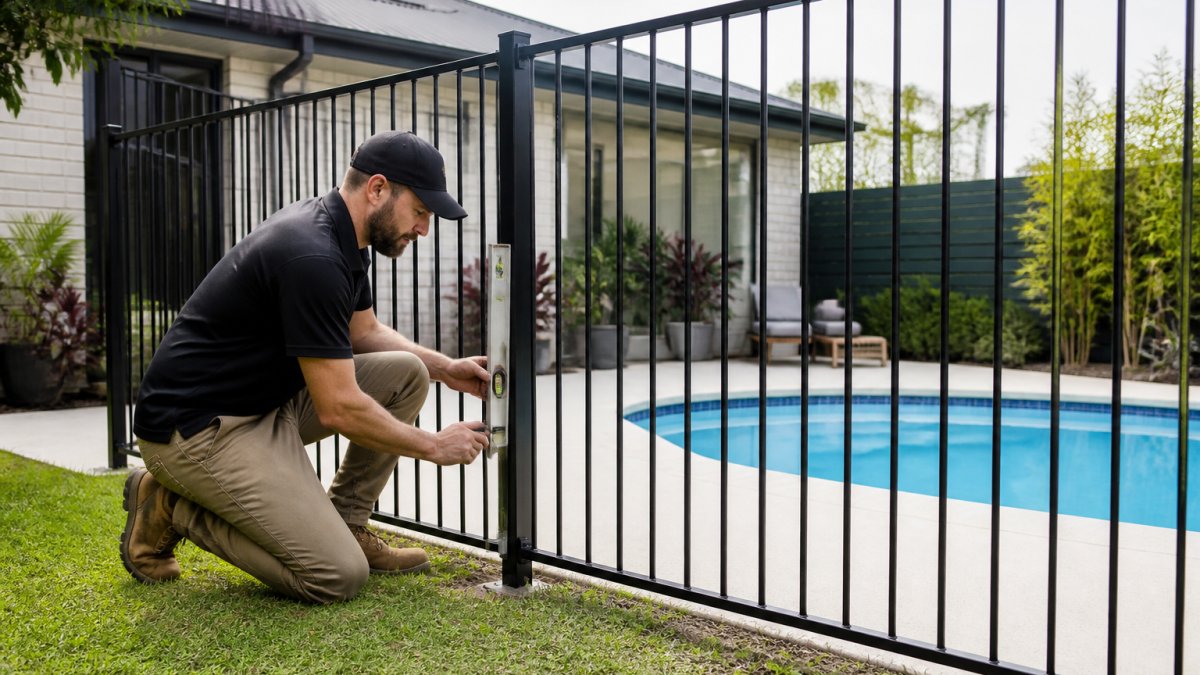
Watch out: Pool safety fencing has specific requirements. Check the rules that apply to your property before you choose a material or a design (Owning a pool or spa: your obligations).
Timber vs Colorbond Fencing: How They Compare
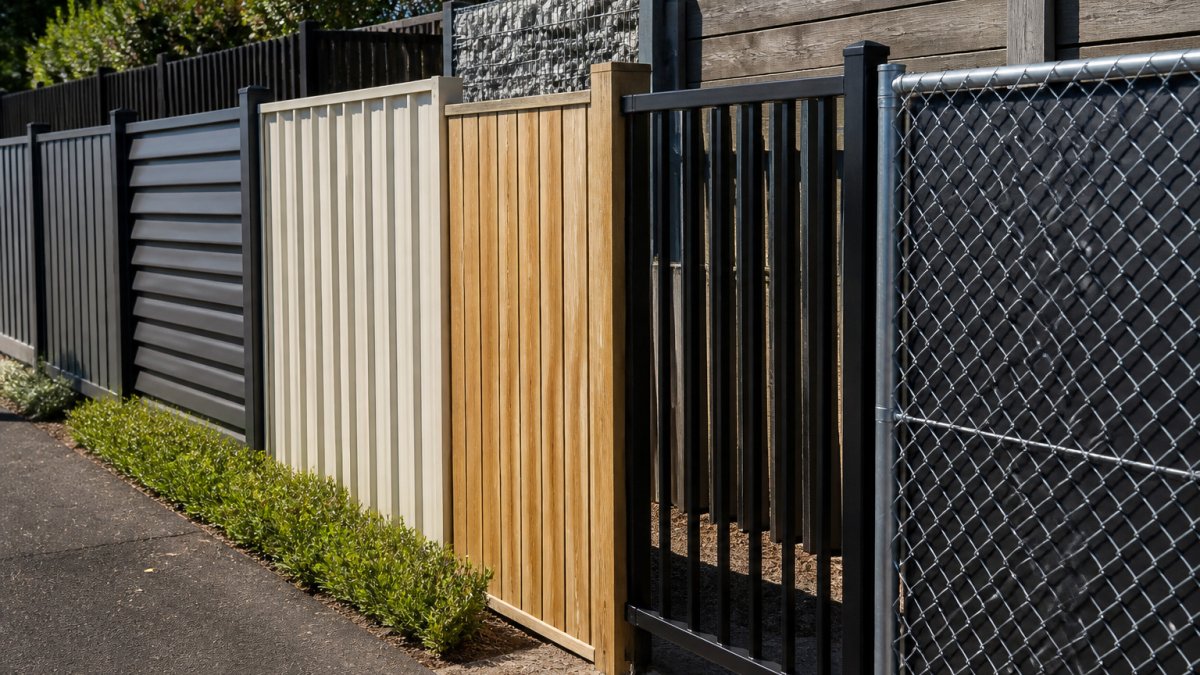
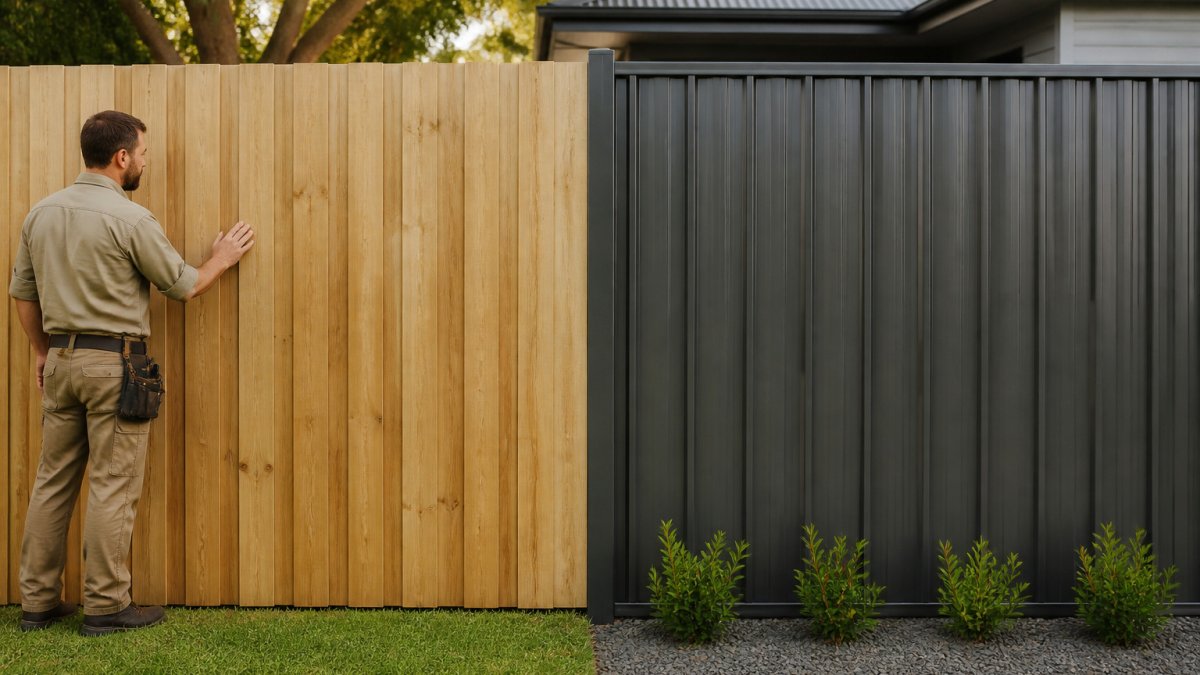
Timber and Colorbond are the two materials most homeowners compare first, and the comparison is usually framed as looks versus upkeep. That framing is too simple. The real differences sit in treatment class, fixing method, coating performance and how each material behaves on an exposed or sloping site.
Timber: what actually determines performance
Timber fencing performance is decided before installation, by the treatment class of the timber and the species used.
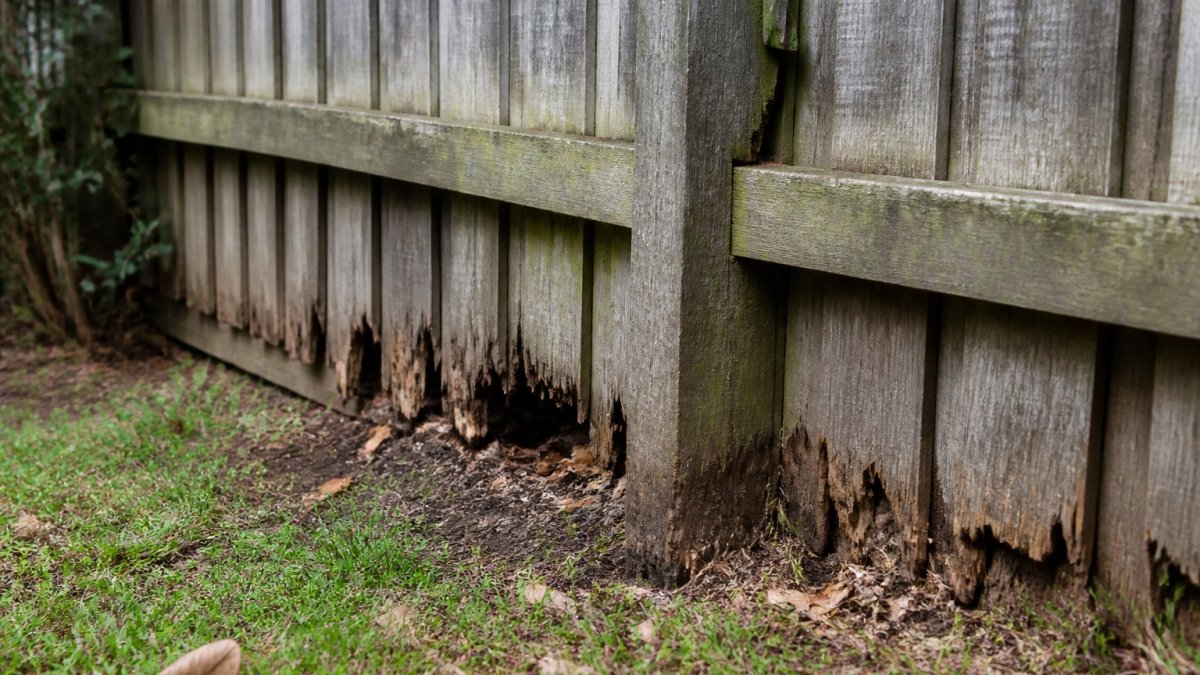
- Treatment class: Timber for in-ground contact (posts) needs a higher hazard class than palings that sit above ground. Ask your supplier which hazard class the posts and palings carry, because a post rated for above-ground use will fail early when set in soil.
- Species: Hardwood palings and posts generally resist rot and insect attack better than softwood, but they are heavier, harder to fix and more expensive. Softwood is commonly used for palings where it is treated and maintained.
- Movement: Timber expands and contracts with moisture. Palings can shrink, cup or split, and posts can move in reactive soil. A small gap between palings that looks tight on installation day can open over a dry summer.
- Fixings: Galvanised or stainless fixings matter. Standard steel nails and screws corrode faster in coastal or damp conditions and stain the timber as they break down.
Timber generally needs a staining or sealing cycle to hold its appearance and slow moisture uptake. The interval depends on exposure, coating product and climate, so ask your installer what schedule they recommend for your site.
Colorbond: what actually determines performance
Colorbond is pre-painted steel, and its long-term performance depends on the steel base, the coating system and how the panels are fixed.
- Coating: The paint system is factory-applied, so the finish is more consistent than site-painted timber. Scratches and cut edges are the weak points, and touch-up paint should be applied to any exposed steel after installation.
- Fixings: Colour-matched screws with sealing washers are commonly used in steel roofing and fencing. A missing or over-driven washer is a common cause of water ingress and early corrosion.
- Profile: Corrugated, flat and ribbed profiles behave differently in wind and in how they block sightlines. A flat sheet gives full privacy; a corrugated profile can leave small gaps at the laps.
- Noise and heat: Steel panels transmit more noise and heat than timber. On a boundary close to a bedroom window, that is worth factoring in.
The comparison that matters
Rather than asking which material is better, compare them on the criteria that decide long-term satisfaction:
- Privacy: Solid Colorbond sheeting blocks sightlines completely. Timber palings give strong privacy when laid tightly, but movement can open gaps over time.
- Upkeep: Colorbond generally needs little beyond occasional washing and touch-up. Timber generally needs a coating cycle and periodic checks for loose or split palings.
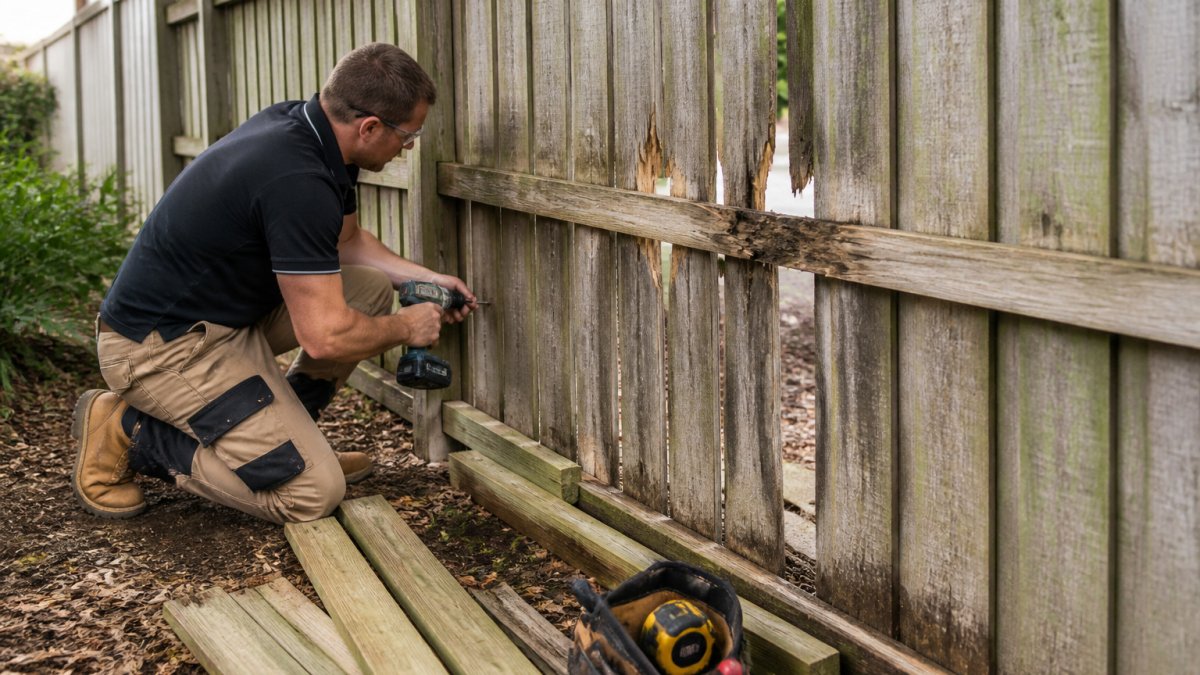
- Repair: A damaged Colorbond sheet can usually be replaced individually. A damaged timber section is also straightforward to replace, but matching the aged colour of surrounding palings is harder.
- Site fit: Timber is easier to step and cut on uneven ground. Colorbond panels are manufactured to set lengths, so slopes and returns need more planning.
- Appearance: Timber suits natural and heritage settings. Colorbond offers a controlled colour range and a uniform finish that suits modern homes.
Neither material wins on every criterion. The right choice follows from which criteria you ranked highest at the start, and from how exposed your site is.
The two materials differ on several criteria that decide long-term satisfaction, as summarised below.
| Criterion | Timber | Colorbond |
|---|---|---|
| Privacy | Strong when laid tightly; gaps can open | Solid sheeting blocks sightlines completely |
| Upkeep | Coating cycle and checks for loose palings | Washing and occasional touch-up |
| Repair | Matching aged colour is harder | Damaged sheets replaced individually |
| Site fit | Easier on uneven ground | Set lengths need more planning on slopes |
| Noise and heat | Lower transmission than steel | Transmits more noise and heat |
Best Fencing Material for Privacy
For privacy, the material and the design matter equally. Solid Colorbond sheeting blocks views completely. Timber palings also give strong privacy when they are installed tightly. Open battens let light and air through while still softening sightlines.
A batten fence can suit a modern look and partial screening rather than full blockage. A solid sheet fence suits properties that need complete privacy from a neighbour or a busy road. Check the panel gaps and height before you order, because a small gap can reduce the privacy you expected.
Low-Maintenance Fencing Materials and Long-Term Upkeep
If you want to spend less time on upkeep, look at materials that resist weather and do not need regular painting or sealing. Powder-coated aluminium and Colorbond steel are commonly chosen as low-maintenance materials. Treated timber can last well, but it needs periodic staining or sealing and a check for loose palings.
Maintenance is not only about the material. Posts and footings affect how long any fence lasts. Ask your installer how the posts are set and what protection they receive against ground moisture.
Fence Material Cost Factors Beyond the Quote
The price on a quote is the purchase and installation cost, not the cost of owning the fence. A more useful approach is to model total cost of ownership over the period you expect to keep the fence and compare materials on that basis.
Build the model in four lines
- Upfront cost: Supply and installation, including posts, footings, gates and site preparation.
- Recurring cost: Coatings, treatments, washing, minor repairs and hardware replacement.
- Repair and replacement cost: The likely cost and frequency of replacing damaged sections, posts or panels.
- End-of-life cost: Removal and disposal, which applies to every material and is easy to forget.
Add the four lines over your chosen horizon and divide by the years to get an annual cost. That figure, not the quote, is what you are really comparing.
What drives each line
Site preparation. Clearing, levelling and removing old fencing add cost before any new material arrives.
Ground conditions. Soft, rocky or sloping ground changes how footings are dug. Rock may require different equipment; soft ground may require deeper or wider footings.
Retaining needs. A steep block may need a retaining wall before the fence can be installed safely.
Gates and automation. Gates add cost per opening, and automated gate systems add hardware, power and servicing.
Recurring costs by material
- Timber: A staining or sealing cycle, plus periodic replacement of split palings and loose fixings. The interval depends on exposure and coating product, so ask your installer for a site-specific schedule.
- Colorbond: Occasional washing and touch-up of scratches and cut edges. Little else under normal conditions.
- Aluminium: Similar to Colorbond, washing and touch-up, with powder coating protecting the surface.
- Masonry: Little routine upkeep, but repointing and repair after movement or impact are specialist jobs.
A practical way to compare two quotes
Take the two itemised quotes and add, for each material:
- The expected number of coating or treatment cycles over your horizon, multiplied by the quoted cost per cycle.
- An allowance for one or two section repairs, based on the quoted per-section price.
- Removal and disposal at the end of the horizon.
This turns a price comparison into a cost-of-ownership comparison, and it usually changes the ranking. It also gives you a defensible basis for choosing the more expensive material when the numbers support it, or for choosing the cheaper one when they do not.
Matching Materials to Your Site: Slopes, Soil and Boundary Rules
Your site shapes the right choice. On a slope, panels may need to step down, and the fence line may need a retaining wall to stay stable.
Boundary rules also matter. Fences on or near a shared boundary may need neighbour agreement or local approval, depending on the height and location.
Watch out: Do not assume the boundary line is where the existing fence sits. Confirm the title boundary before you build, because a fence placed in the wrong spot can lead to a dispute.
Booking a Consultation Before You Choose
The easiest way to narrow your options is a site visit. A consultation lets you see the slope, soil, access and boundary before you commit to a material. Talking through your purpose, your budget and your site with a professional fencing installer before you commit can help you narrow your options.
When you are ready, you can request a quotation for your specific fence. If you want to compare options first, you can review our fencing supply and installation services across Melbourne. For a detailed look at Colorbond costs in Melbourne, see this Colorbond fencing installation cost guide. Privacy-focused options such as our aluminium batten fence panel and the Blade Fence are also worth considering.
For reference on general fencing and property guidance, consult your state's building authority and local council before you finalise your design.
Frequently Asked Questions
What factors should I consider when choosing fencing materials?
Start with the job the fence must do: privacy, security, containing pets or children, or marking a boundary. Then check how the material handles your site, including slope, soil movement and exposure to wind and sun. Compare upfront cost against upkeep over the years you expect to keep the fence. Finally, confirm any height, setback or boundary requirements with your local council before you order materials, since those rules can rule out certain options.
Which fencing material is best for privacy?
Solid panel options give the most privacy because they block sightlines fully. Colorbond sheeting and solid timber palings both achieve this, while open slat or picket styles let more light and view through. Check the panel height and the gap between boards, as small gaps can still allow visibility. If privacy is the main goal, choose a solid profile at the height your council allows and ask your installer to show you samples in the actual finish.
Is timber or Colorbond fencing better?
Neither is better in every situation. Timber suits buyers who want a natural look and are willing to stain or seal it every few years, and it can be a good match for garden settings. Colorbond suits buyers who want low maintenance and a consistent finish that does not rot, warp or need repainting. Compare the total cost over the life of the fence, not only the installed price, and consider how each option will look against your home.
Which fence material requires the least maintenance?
Colorbond steel generally requires the least maintenance, as its factory-applied coating resists rust and does not need regular staining. Timber needs periodic treatment to resist moisture, insects and weathering, and the frequency depends on the timber species, its treatment and your local climate. Ask your installer what the expected upkeep is for each option on your site so you can budget for it accurately.