 How-to
7 Steps to Repair a Damaged Timber Fence
Quick Summary
To repair damaged timber fence sections, first probe posts, rails and palings to find the real fault, then trace its cause. Rot, insect attack and ground movement each need a different fix, so match the repair to the cause. Replace single palings or rails for localised damage, but consider replacing the whole fence if structural rot runs through most posts.
- Press a screwdriver into post bases and rails; soft or spongy timber means decay.
- Rot needs moisture, so fix the water source before repairing the timber.
- Treat all cut ends and faces with exterior preservative before fitting new palings.
- Repair when damage covers under about 20 to 25 percent and posts are sound.
- Brace any sagging or leaning section before removing a rail or post.
Table of Contents
- How to Assess Damage Before You Start Repairing a Timber Fence
- Tools and Materials You Need to Repair a Timber Fence
- How to Replace a Fence Paling That Has Rotted or Split
- How to Fix a Broken Fence Rail
- How to Repair a Leaning Fence Post
- Sanding, Sealing and Protecting the Repaired Timber
- Repair or Replace a Timber Fence: Deciding What Makes Sense
- Booking a Professional Assessment for Your Timber Fence
- Frequently Asked Questions
How to Assess Damage Before You Start Repairing a Timber Fence
Last Updated: October 30, 2026
Before you pick up a hammer, walk the full length of your timber fence and assess the damage: use a screwdriver, a torch and your phone camera so you can repair damaged timber fence work with the real problem in view. Most homeowners replace the first broken paling they see, then find the real problem is a rotted post two metres away.
Step 1: Probe for rot, don't just look
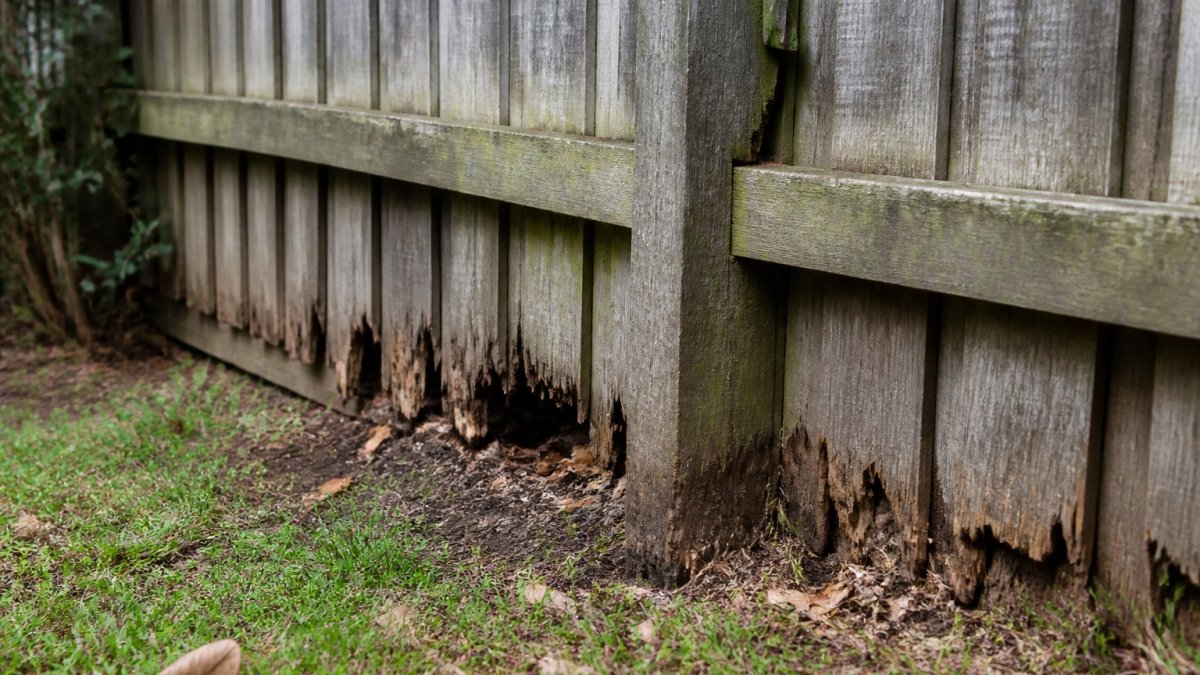
Press a screwdriver into the base of each post and along each rail. Sound timber resists the tip and springs back; soft, spongy or crumbling timber means decay. Pay particular attention to the post base, where wood meets soil, moisture sits there longest and rot almost always starts at or just below ground level.
Check these areas in order:
- Post bases: Look for dark staining, soft grain and hollow sound when tapped.
- Rails: Look for sagging, gaps where the rail meets the post, and loose or rusted fixings.
- Palings: Note any that are split, warped, cupped or missing.
Step 2: Identify what actually caused the damage
This is the step most guides skip, and it decides whether a repair will last.
Rot (fungal decay). Look for soft, crumbly timber, dark staining and a musty smell.
Insect damage. Fine powdery dust (frass) near small round holes, hollow-sounding timber, or mud tubes running up a post are all warning signs.
Surface weathering. Grey, mouldy or surface-checked timber that is still firm under the screwdriver usually just needs sanding and sealing rather than replacement.
Step 3: Decide what the damage means for the repair
Once you know the cause, the repair path becomes obvious:
- Localised rot with a dry, sound structure: replace the affected boards and treat the cut ends.
- Rot with a moisture source: fix the drainage or soil contact first, then repair.
- Insect damage: treat or replace affected timber and have the extent assessed before closing up the section.
If you are unsure whether the damage is rot, insects or movement, treat it as structural until proven otherwise and get a professional opinion. The cost of an assessment is small next to rebuilding a fence that fails again in two years.
The table below summarises the main damage causes and what each one points to, so you can match the fault to the right fix.
| Damage type | Signs to look for | Fix direction |
|---|---|---|
| Rot (fungal decay) | Soft crumbly timber, dark staining, musty smell | Trace and fix moisture source, then repair |
| Insect damage | Powdery frass, small round holes, mud tubes, hollow sound | Treat or replace timber, assess extent |
| Ground movement | Lean follows the ground, posts lifted or sunk in a line | Address footing or drainage first |
| Surface weathering | Grey, mouldy, surface-checked but firm timber | Sand and seal, no replacement needed |
Tools and Materials You Need to Repair a Timber Fence
Most timber fence repairs need a small, basic set of tools, and many homeowners already own several.
Gather these before you start:
- Cordless drill and driver bits
- Claw hammer and a pry bar
- Handsaw or circular saw, plus a spirit level
Choose materials that suit the timber. Treated timber is the usual choice for replacement palings because it resists decay.
Watch out: Avoid mixing timber species or treatments in one run unless you have to.
Keep a small stock of spare palings in the shed.
How to Replace a Fence Paling That Has Rotted or Split
Replacing a single paling is one of the quickest fence repairs you can do, and the time it takes depends on how many fixings you need to remove.
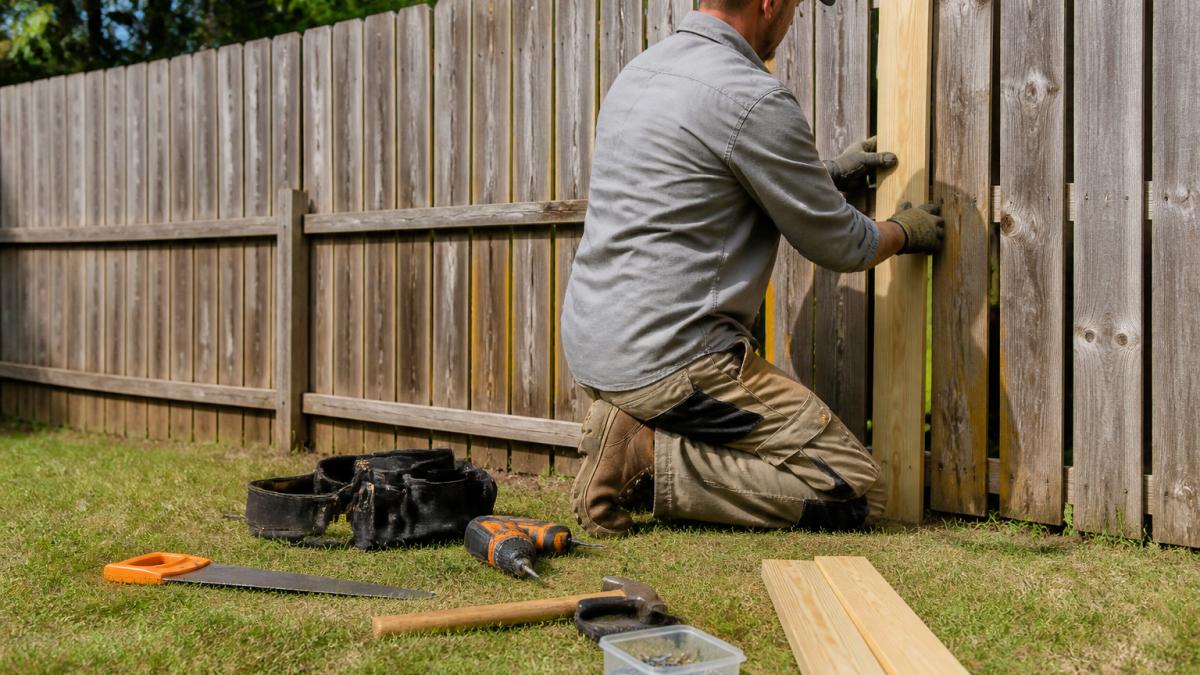
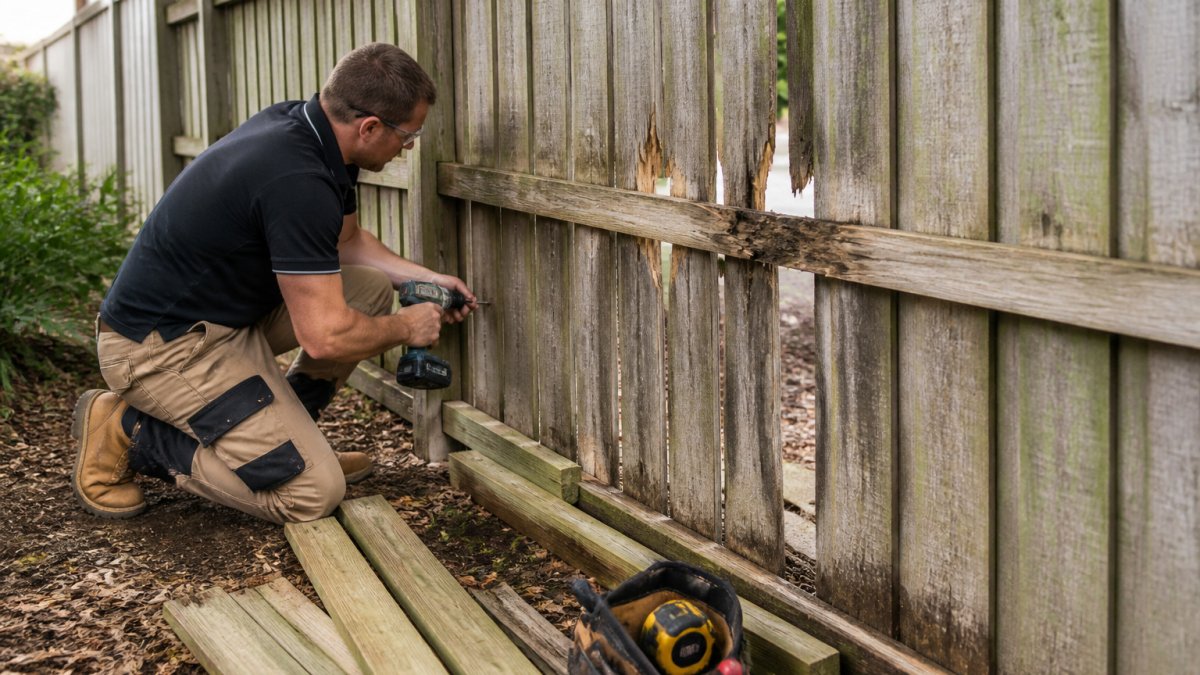
- Remove the damaged paling. Pry it away from the rails with a pry bar, working slowly to avoid splitting neighbouring boards.
- Remove old nails. Pull them out fully or cut them flush with a hacksaw, so they do not catch the new board.
- Measure and cut the new paling. Match the length of the old board exactly.
- Apply preservative to all cut ends and faces. This is the step most people skip, and it is the one that decides how long the repair lasts.
- Fix the new paling to the rails. Use two galvanised nails or screws at each rail, spaced evenly.
- Check alignment. Use a spirit level so the new board sits plumb with its neighbours.
Many homeowners find that a rotted paling often sits next to other weakened boards. Check the neighbours before you close up the section.
How to Fix a Broken Fence Rail
A broken or sagging rail puts stress on every board it supports, so fix it early.
For a cracked or split rail, sister a new piece of timber alongside it.
For a rail that has pulled away from the post, check the fixing first.
Watch out: Always brace a sagging run before removing a rail. A fence that has lost its support can collapse onto you or a neighbour's property.
How to Repair a Leaning Fence Post
A leaning post is the most serious common fault, because the fence relies on it for stability. If the base has failed, you can browse replacement fencing posts to match your fence.
If the post is loose but sound, dig around the base carefully to expose the buried timber.
If the base has rotted, the post usually needs replacing.
Soil conditions matter here. Clay soils expand when wet and shrink when dry, pushing posts out of line; sandy or loose soils may not hold a footing well.
Sanding, Sealing and Protecting the Repaired Timber
Once the structure is sound, protect the whole fence, not just the new sections, so the repaired damaged timber fence weathers evenly.
Sand the repaired areas with medium sandpaper, then finish with fine grit.
Apply an exterior wood preservative first, then a stain or sealant.
Reseal the fence every two to three years, or sooner in wet or exposed sites. Regular checks catch small problems before they turn into full repairs.
Repair or Replace a Timber Fence: Deciding What Makes Sense
Not every damaged fence is worth repairing. The right call depends on how much of the structure has failed, whether the failure is structural or cosmetic, and how the cost of repair compares with replacement over the coming years.
Start with the structure, not the surface
A simple rule helps: if the damage is limited to a few palings or one post, repair. If rot runs through most of the posts and rails, replacement is usually the better long-term choice. But the more reliable test is structural:
- Repair when: Damage covers less than about 20 to 25 percent of the fence, the posts are sound when probed, the rails still hold fixings firmly, and the fence is plumb along its run.
- Replace when: Posts are rotted at ground level across several sections, the fence leans throughout, rails pull away from posts repeatedly, or fixings no longer hold in the timber.
- Investigate first when: The damage is insect-related, the fence sits on a slope or unstable ground, or the lean follows the ground rather than the boards.
Weigh the cost over time, not just today
A single paling replacement is cheap and quick. A post replacement is bigger because it involves digging out the old footing and setting a new one. Repeated repairs on a failing fence can add up to more than a new fence over a few years, and each repair is another weekend you don't get back.
A useful way to think about it: if you expect to repair the same run more than once in the next two to three years, price a replacement before you commit to the repair. Get both figures in writing so you are comparing like with like, including disposal of the old fence and any footing work.
Check safety before you commit to a repair
Some damage makes a fence unsafe to leave standing, let alone repair yourself:
- A post that is rotted through at the base can fail without warning and take a whole run with it.
- A fence that leans over a footpath, driveway or neighbour's property is a liability risk.
- Termite damage can leave timber hollow while it still looks intact.
If any of these apply, brace the section or keep people clear until it is assessed. Do not stand on the leeward side of a leaning fence to push it back.
Boundaries and neighbours
A shared fence can involve shared costs and agreements. Before major work, check the boundary position and talk to your neighbour. Dividing fences are generally governed by state or territory legislation, which sets out who pays and what notice is required. Check the rules for your state or territory before committing to a replacement, because the process can differ from a repair you do entirely on your own side.
When to stop and get an assessment
Call in help if you find structural rot across several posts, if the fence sits on a slope or unstable ground, if you are unsure whether the damage is from termites, or if the fence is shared and you and your neighbour disagree on the fix. A professional assessment gives you a written scope and a clear repair-or-replace recommendation, which is also useful if the work is shared.
Booking a Professional Assessment for Your Timber Fence
At AK FENCING VIC PTY LTD, our team can assess the fence, explain the options and tell you whether a repair or replacement makes more sense. Our fully licensed and insured team offers a workmanship guarantee on installations, and we provide transparent, obligation-free quotes.
When you are ready, request a quote and we will set out the options for your fence in writing.
Frequently Asked Questions
Can you repair a fence?
Yes, most timber fences can be repaired. Individual palings, broken rails and leaning posts can usually be replaced or reinforced without rebuilding the whole run. Repair makes sense when the damage is limited to a few sections and the posts and footings are still sound. If more than about a fifth of the fence is heavily damaged, or the posts have failed, replacing the affected run is often the more economical choice. A professional assessment can confirm which option suits your fence.
Can damaged wood be repaired?
Some damaged timber can be repaired, but the extent matters. Surface splits, minor cracks and small areas of weathering can be filled, sanded and sealed. Wood that is soft when probed with a screwdriver, shows fungal growth through the grain or has lost structural strength has rotted and should be cut out and replaced. Filler cannot restore strength to rotted timber, so replacing the damaged section is the reliable fix.
What kind of wood do you use for fence rails?
Fence rails and palings are commonly made from treated pine or hardwood. Treated pine is the most common choice for residential fencing because it is affordable and resists decay when it carries the correct hazard rating for ground contact or above-ground use. Hardwoods such as spotted gum are more durable but cost more. When replacing a rail, match the timber species and treatment level of the existing fence where possible so the repair blends in and performs the same over time.
Will painting an old fence make it last longer?
Painting or staining can extend the life of a timber fence, but only if the timber is sound and dry before coating. Paint applied over rot or moisture traps water and speeds up decay. Clean, sand and allow the wood to dry fully, then apply a quality penetrating stain or sealer and recoat according to the product instructions, typically every few years. Pricing for materials and labour depends on fence length, timber condition and access, so contact AK Fencing Vic Pty Ltd for a quote tailored to your property.