 How-to
How to ensure pool fencing meets Victoria regulations
Last Updated: October 26, 2026
Quick Summary
How to ensure pool fencing meets Victoria regulations requires three key steps: understand the physical requirements including 1.2 metre minimum height, 900 millimetre non-climbable zone, and 100 millimetre maximum ground clearance; arrange a professional inspection by a registered building practitioner; and lodge a Certificate of Barrier Compliance with your council.
- Pool barriers must be minimum 1.2 metres high on all sides with no gaps exceeding 100 millimetres from ground level.
- A 900 millimetre non-climbable zone on the pool side must be clear of objects, furniture, and vegetation.
- All access points require self-closing, self-latching gates that operate from every open position without a key.
- Inspections must be conducted by a registered building practitioner and result in a Certificate of Barrier Compliance.
- Monthly gate testing, seasonal gap measurements, and annual full perimeter inspections maintain ongoing compliance.
Table of Contents
- Understanding pool fencing requirements in Victoria
- Pool fence height and non-climbable zone specifications
- Barrier gaps, ground clearance, and access points
- Pool gate self-closing requirements and latch standards
- Pool fence compliance checklist for Victoria
- Pool barrier inspection Victoria and certification process
- Step 1: Confirm your pool or spa is registered
- Step 2: Identify which barrier standard applies to your property
- Step 3: Engage a registered building practitioner
- Step 4: Prepare for the inspection
- Step 5: Rectify defects and arrange re-inspection
- Step 6: Obtain and lodge the Certificate of Barrier Compliance
- Documents to keep on file
- Common defects and maintenance to stay compliant
- Getting your pool barrier installation compliant
- Frequently Asked Questions
Understanding pool fencing requirements in Victoria
Pool safety in Victoria is governed by strict regulations designed to prevent unauthorised access and protect children from drowning.
Victoria's Building and Plumbing Commission sets the standards for pool barriers. The Commission publishes guidance on swimming pool barriers and safety requirements that every owner must follow.
Your pool barrier must isolate the pool completely from the house and surrounding property, a four-sided barrier with no gaps and no shortcuts.
The compliance process involves three key steps: understanding the physical requirements, arranging a professional inspection, and lodging a Certificate of Barrier Compliance.
Pool fence height and non-climbable zone specifications
Minimum fence height and boundary fence rules
A boundary fence used as part of your barrier must also meet the 1.2 metre minimum.
The 1.2 metre height requirement is consistent across Victoria, not negotiable based on pool size, depth or location.
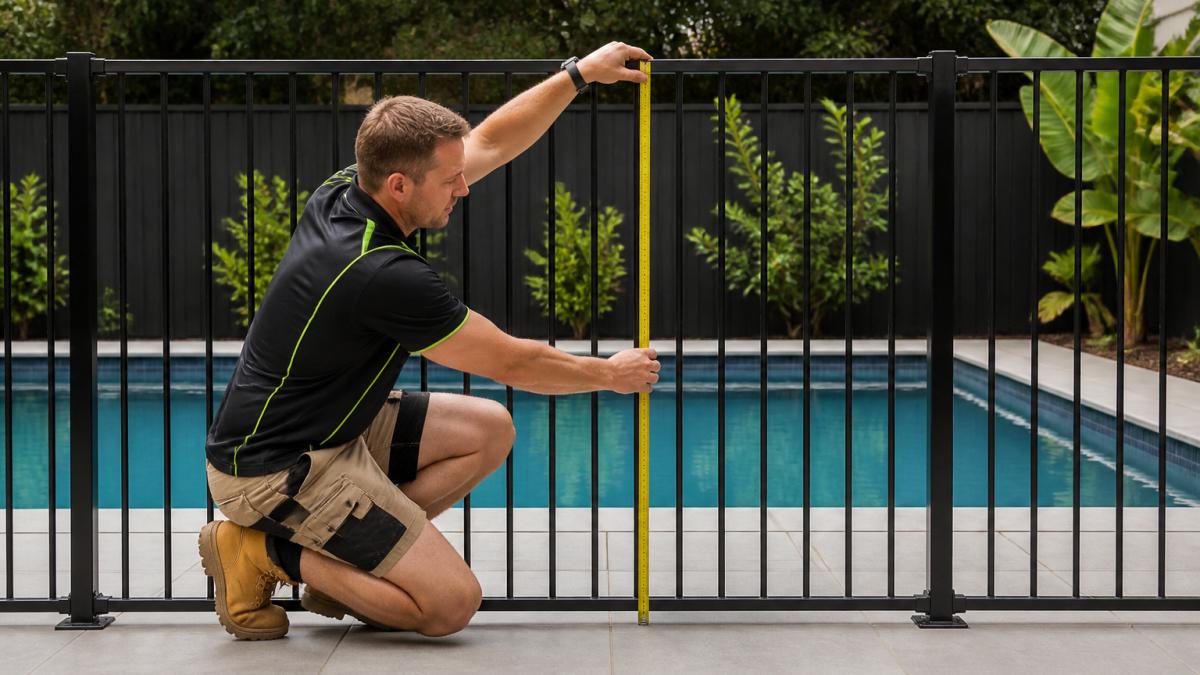
Non-climbable zone and climbable objects
A 900 millimetre non-climbable zone must exist on the pool side of the barrier. Pool fencing standards specify this 900 millimetre zone to prevent children climbing over This means nothing that a child could use as a step or handhold can exist within 900 millimetres of the pool-facing surface.
Remove or relocate any climbable objects in this zone:
- Garden beds or planters
- Outdoor furniture
- Landscaping features
This applies to both inside and outside the barrier. A tree branch hanging over the fence or a chair positioned against it is a defect, the barrier must be genuinely climbable-proof.
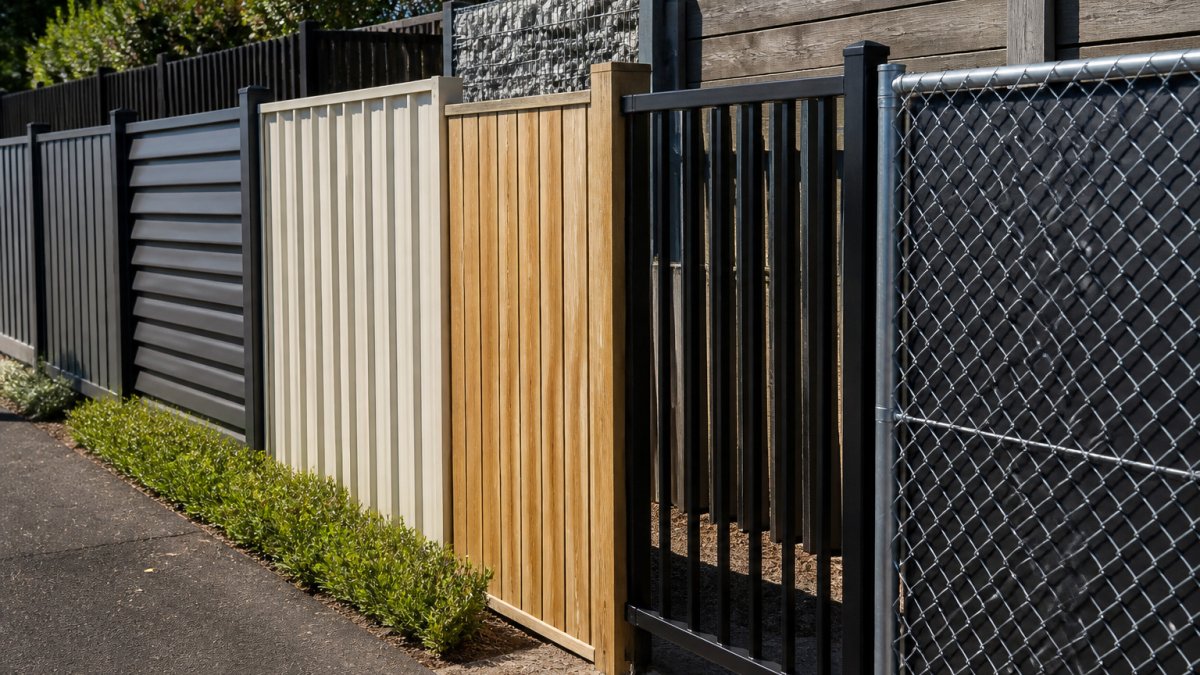
Colorbond fencing is naturally non-climbable because it has no handholds or footholds. Timber fencing with horizontal rails can be climbable, which is why requirements often favour solid materials over slatted designs.
Barrier gaps, ground clearance, and access points
Your pool barrier cannot have gaps that allow access. The maximum gap beneath the barrier is 100 millimetres from the ground level.
Uneven terrain is the biggest challenge here.
Access points, gates, doors, and openings, must be controlled. Every access point needs a self-closing, self-latching gate. There are no exceptions.
Pool gate self-closing requirements and latch standards
Your pool gate must close and latch by itself from every open position. This isn't optional. Self-closing and self-latching gate requirements are core to pool barrier compliance A gate that swings open on its own defeats the entire purpose of the barrier.
The gate must latch securely without a key or combination, be impossible for a young child to open, and hold even if pushed hard.
Test your gate regularly: open it fully, let it close, then push it hard to confirm it stays latched.
Gate hinges and hardware must be strong.
Pool fence compliance checklist for Victoria
Use this checklist to verify your pool barrier meets Victoria regulations:
| Requirement | Specification | Check |
|---|---|---|
| Barrier height | Minimum 1.2 metres | Measure all sides |
| Non-climbable zone | 900 millimetres on pool side | Clear of objects |
| Ground clearance | Maximum 100 millimetres gap | Check entire perimeter |
| Gate operation | Self-closing, self-latching | Test from all positions |
| Boundary fence | Minimum 1.2 metres if used as barrier | Measure height |
| Access points | All controlled by compliant gates | Count and verify each |
| Gaps between panels | Maximum 100 millimetres | Inspect joints |
| Climbable objects | None within 900 millimetres | Visual inspection |
Walk your pool perimeter with this list. Mark any defects. Take photos. This becomes your compliance record.
Pool barrier inspection Victoria and certification process
Inspection and certification are where most owners get lost, because the process is a cycle tied to when the pool or spa was built and which barrier standard applied then. The steps below reflect how the process generally runs; always confirm current requirements with the Building and Plumbing Commission or your local council before acting.
Step 1: Confirm your pool or spa is registered
Before any inspection, confirm the pool or spa is recorded on the relevant council register. Registration is a separate obligation from the physical barrier, and an unregistered pool can stall the compliance process. Have registration details, property details and any prior barrier documentation on hand.
Step 2: Identify which barrier standard applies to your property
This is the step most owners skip, and it determines everything else. The applicable requirements depend on when the pool or spa was constructed and when the barrier was last modified, a pool built decades ago may be assessed against a different standard than one completed recently, and renovations can change which rules apply.
Step 3: Engage a registered building practitioner
The inspection must be carried out by a registered building practitioner with pool barrier experience. Verify registration through the Building and Plumbing Commission's register, ask how many pool barrier inspections they have completed, and request references.
Step 4: Prepare for the inspection
A productive inspection starts with a self-audit. Walk the perimeter and check:
- Barrier height against the applicable minimum
- The non-climbable zone on the pool side, clear of objects and vegetation
- Ground clearance and gaps between panels
Photograph any defects you find. This record helps the practitioner and gives you a before-and-after trail for rectification.
Step 5: Rectify defects and arrange re-inspection
Rectify any defects and arrange a re-inspection. Keep invoices, photographs and practitioner notes, they form your compliance record if the barrier is ever questioned.
Step 6: Obtain and lodge the Certificate of Barrier Compliance
Once the barrier passes, the registered building practitioner issues a Certificate of Barrier Compliance. Lodge it as directed by your council and keep a copy, it records the inspection date and practitioner details, and you may need it when selling the property or after an incident.
Documents to keep on file
- Pool or spa registration details
- The applicable barrier standard for your property
- Inspection report and any defect notices
Keeping these together means you can answer a council query or a buyer's question without scrambling for paperwork.
Common defects and maintenance to stay compliant
Most failed inspections come down to a small number of recurring defects. The fixes below are typical patterns; confirm yours with a registered building practitioner.
Defect 1: Ground gaps that widen over time
How it happens: Soil settles, mulch sinks, paving shifts and posts move, a gap within the allowance can widen past it within a season or two.
How to diagnose: Measure the gap at multiple points along the entire perimeter, not just the corners. A single over-limit gap makes the barrier non-compliant.
How to fix it: Re-grade the ground line, add a compacted surface under the barrier, or adjust the fence line for a consistent gap.
Defect 2: Gates that no longer self-close or self-latch
How it happens: Hinges sag, springs weaken, strike plates misalign, debris builds up in the latch, and gates swell or drop with moisture and temperature changes.
How to diagnose: Open the gate from several positions, partly open, fully open, and from rest, and let it close under its own weight.
How to fix it: Clean and lubricate the latch, replace worn springs and hinges, realign the strike plate, and adjust hinge tension.
Defect 3: Climbable objects inside the non-climbable zone
How it happens: Furniture gets moved, plants grow, children leave toys out, and landscaping features are added after the barrier was installed.
How to diagnose: Walk the pool side of the barrier and look for anything a child could stand on or grip, chairs, planters, garden beds, taps, air-conditioning units, tree branches, and horizontal rails.
How to fix it: Remove or relocate the object, prune vegetation back, or replace climbable barrier sections with a non-climbable design.
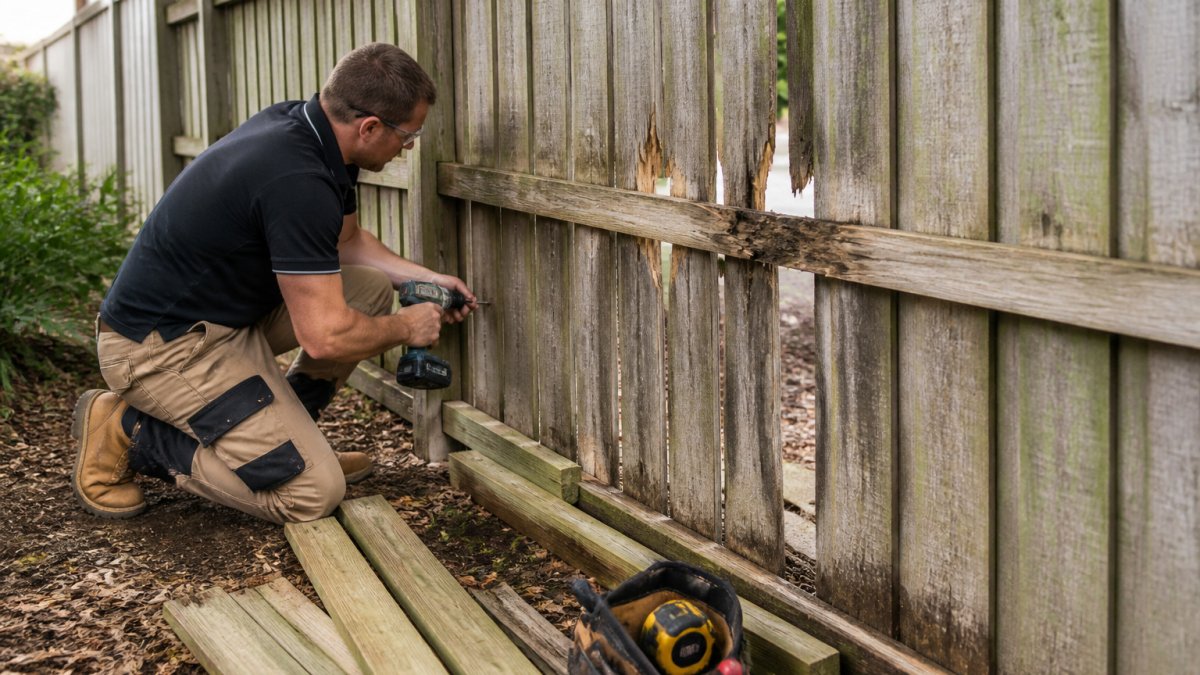
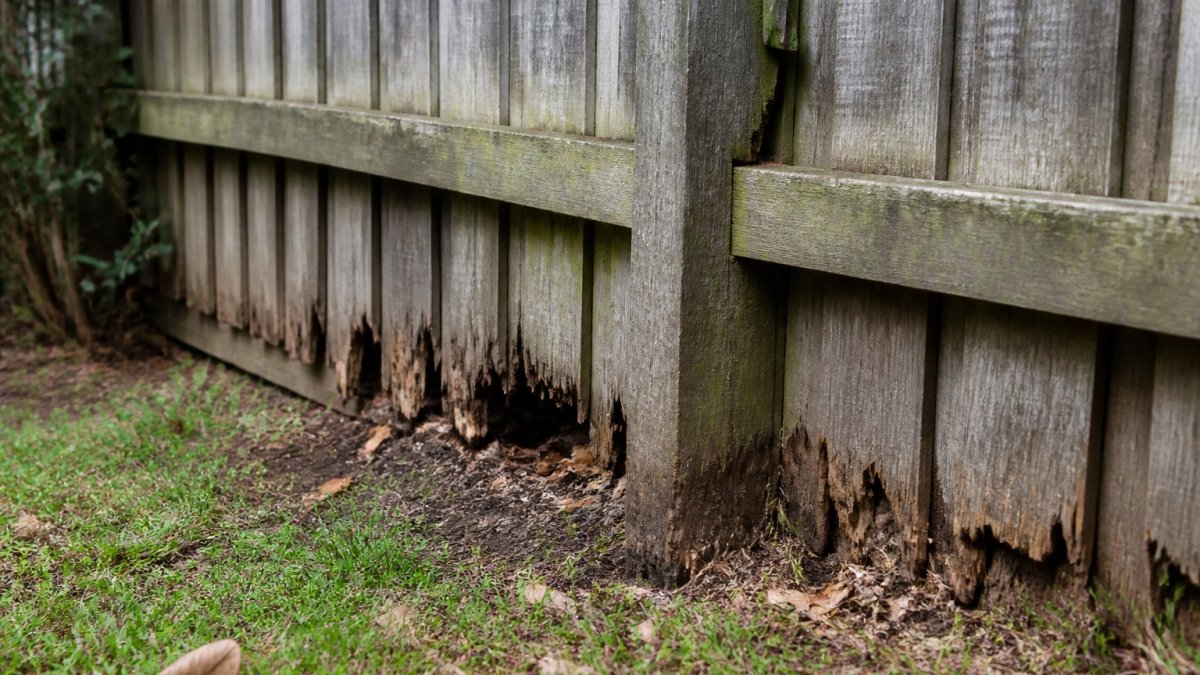
Defect 4: Damaged or deteriorated panels and posts
How it happens: Corrosion, impact damage, rot in timber, and post movement from soil or root activity.
How to diagnose: Look for cracked panels, missing sections, leaning posts, and sag in the fence line.
How to fix it: Replace damaged panels promptly, reinforce or re-set leaning posts, and correct the fence line.
Defect 5: Boundary fences that fall short
How it happens: Owners assume an existing boundary fence satisfies the barrier rules.
How to diagnose: Measure the boundary fence height and gaps, and check for climbable features on the pool side.
How to fix it: Extend or replace the boundary fence, add a compliant return or internal barrier, or redesign the barrier so it does not rely on a non-compliant boundary fence.
A simple maintenance routine
- Monthly: test gate self-closing and self-latching; clear debris from latches; check for climbable objects in the non-climbable zone.
- Seasonally: measure ground gaps and panel gaps; inspect hinges and hardware for corrosion; prune vegetation away from the barrier.
- Annually: walk the full perimeter with the compliance checklist, photograph any changes, and book a professional inspection if anything is uncertain.
Maintenance is not optional. A barrier is compliant on the day it passes inspection, keeping it compliant is an ongoing routine, and the defects above are the ones most likely to undo a passing result.
Getting your pool barrier installation compliant
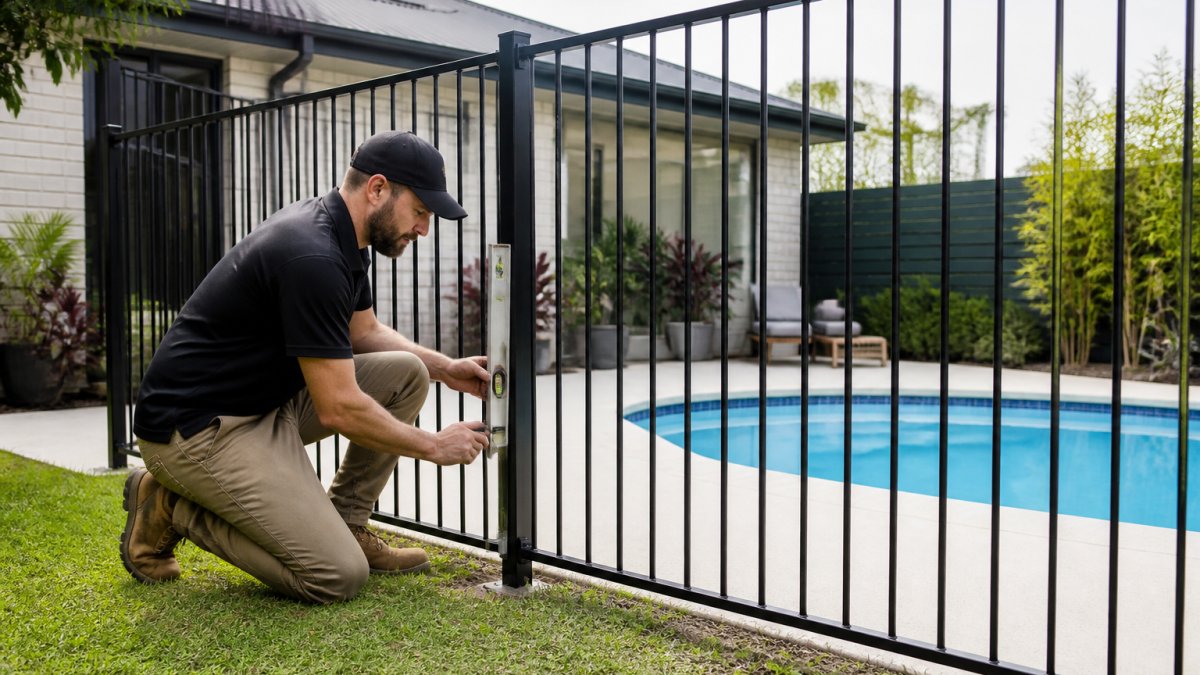
If your current barrier doesn't meet regulations, you need professional installation or upgrade.
Professional fencing supply and installation across Melbourne ensures your barrier meets every requirement.
Request a quotation for your pool barrier project. We provide obligation-free quotes with no hidden costs.
View examples of completed pool fencing projects that meet Victoria regulations.
Frequently Asked Questions
What are the minimum pool fencing requirements in Victoria?
Pool fencing in Victoria must meet the Building Code of Australia and Victorian standards. The barrier must be at least 1.2 metres high, with a non-climbable zone of 900 millimetres on the pool side. Gates must be self-closing and self-latching from every open position. Ground clearance beneath the barrier cannot exceed 100 millimetres. These requirements apply to all pools and spas holding 300 millimetres or more of water. The Building and Plumbing Commission Victoria publishes detailed guidance in their practice note SP 02 on swimming pool barriers.
How often does a pool barrier need inspection in Victoria?
Pool owners must arrange a barrier inspection and lodge a Certificate of Barrier Compliance on the cycle set by Victorian law. The inspection cycle depends on your pool's classification and barrier type. A registered building practitioner or municipal building surveyor must conduct the inspection. After inspection, you must lodge the compliance certificate with your local council. Failure to maintain current certification can result in enforcement action and fines. Contact your local council or the Building and Plumbing Commission Victoria for your specific inspection deadline.
What makes a pool gate self-closing and self-latching?
A self-closing gate closes automatically from every open position without manual force. A self-latching gate locks securely once closed, preventing accidental reopening. Gates must close and latch by themselves from every open position, this includes angles up to 90 degrees. The latch mechanism should not require a key or special knowledge to operate for emergency exit, but must be secure enough to prevent unsupervised access. Gates should not have hold-open devices unless they automatically close and latch when released. Regular maintenance ensures hinges, springs, and latches remain functional.
What should I check before a pool barrier inspection?
Before inspection, verify your barrier meets all physical requirements: measure fence height (minimum 1.2 metres), check ground clearance (maximum 100 millimetres), inspect the 900-millimetre non-climbable zone for climbable objects, and test that all gates close and latch automatically from every position. Remove any items that could be climbed near the barrier. Check for damage, rust, rot, or gaps in the fencing material. Ensure access points are secure and properly latched. Document any defects so a registered building practitioner can advise on rectification before your formal inspection.
Your pool barrier protects children and keeps your property compliant with Victorian law. The regulations are clear. The inspection process is straightforward. The key is getting it right the first time and maintaining it properly. If you're uncertain about any aspect of your barrier, have it inspected now. A compliance certificate is worth far more than the cost of fixing defects later.