 Listicle
Best Colorbond Fencing for Privacy: 2026 Guide
Table of Contents
- Why Colorbond Fencing Wins for Privacy
- Colorbond Fence Styles That Deliver Full-Height Privacy
- Colorbond Fence Height for Privacy: What You Need to Know
- Choosing the Right Colorbond Fence Colours
- Colorbond Fence Maintenance: Keeping Your Privacy Fence in Top Condition
- Durability, Weather Resistance, and Long-Term Performance
- Professional Installation vs. DIY: What You Should Know
- Compliance, Warranties, and Peace of Mind
- Frequently Asked Questions
Last Updated: October 8, 2026
Why Colorbond Fencing Wins for Privacy
When you're looking for the best Colorbond fencing for privacy, you're making a smart choice. Colorbond steel has become the go-to material for homeowners who want a durable, low-maintenance fence that actually delivers on privacy without constant upkeep.
Here's what sets it apart: unlike timber, which warps and rots, or vinyl, which can become brittle in intense heat, Colorbond maintains its structural integrity year after year. The powder-coated finish resists corrosion even in coastal environments. It won't splinter, crack, or require painting every few years. For most homeowners, that's the real appeal.
At AK Fencing Vic, we install Colorbond privacy fences. The material works because it combines practical durability with genuine aesthetic flexibility. You get full-height screening without the visual heaviness of solid timber, and the colour options let you match your property's character rather than forcing a single industrial look.
The best Colorbond fencing for privacy comes down to three factors: the panel style you choose, the height you install, and the colour you select. Get these right, and your fence will deliver exactly what you want.
Colorbond Fence Styles That Deliver Full-Height Privacy
Not all Colorbond panels are created equal when privacy is your goal. The style you choose determines how much you can actually see through (or can't see through) from neighbouring properties.
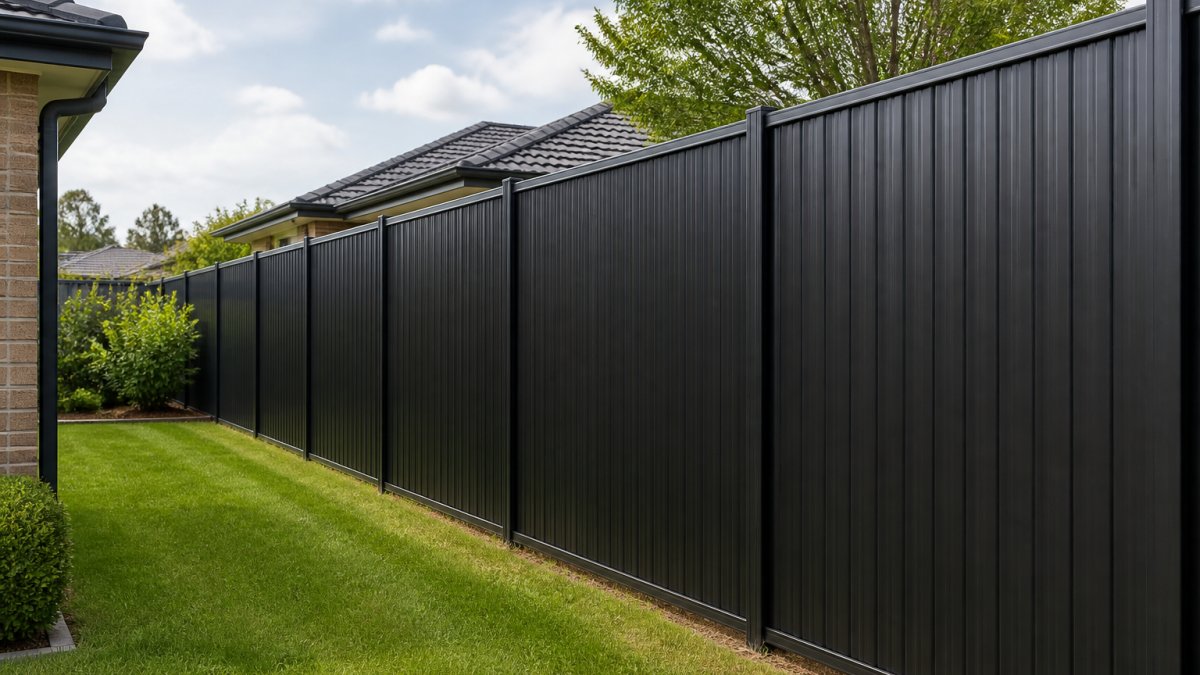
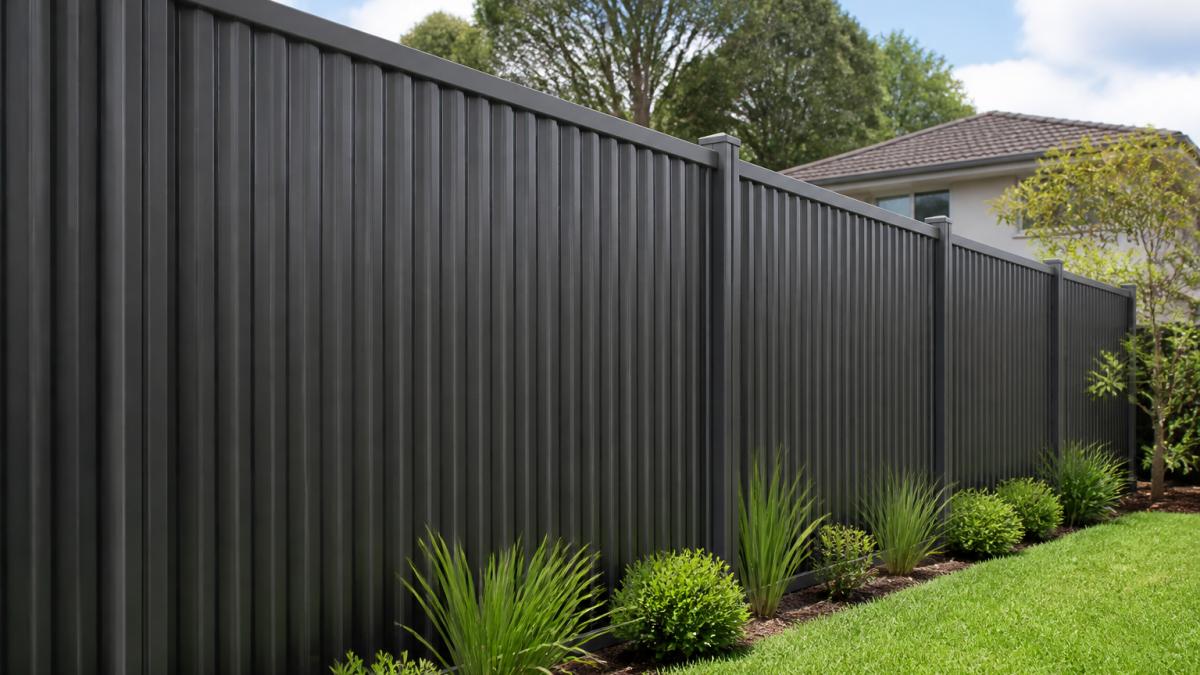
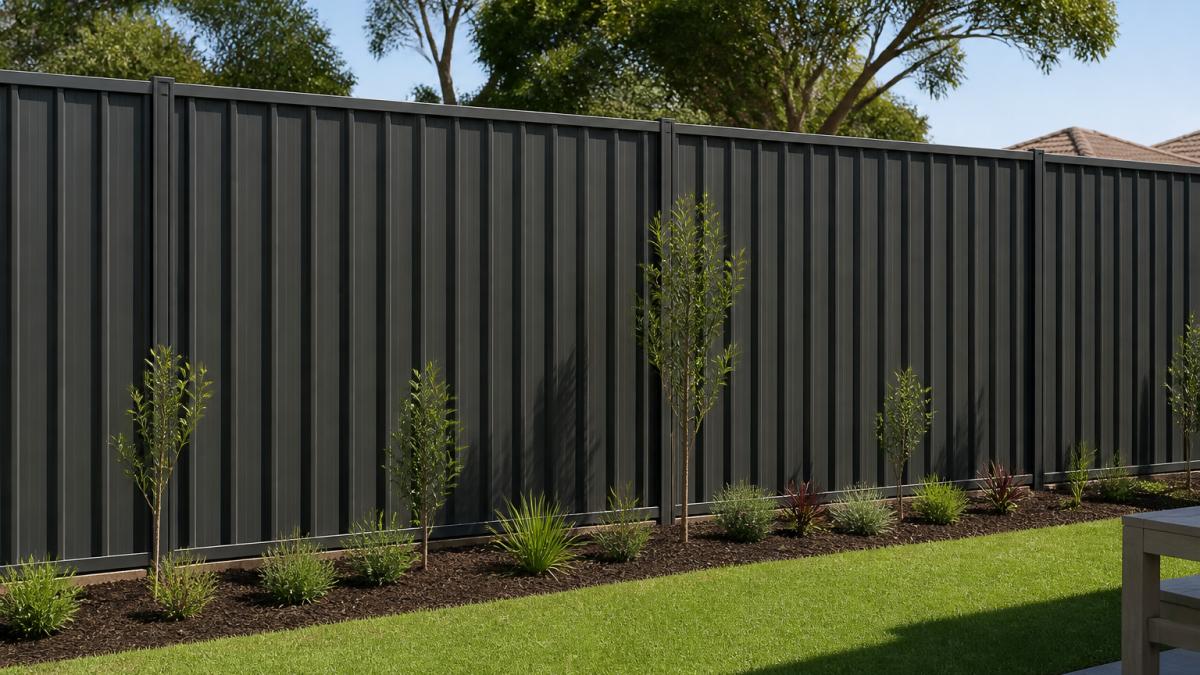
Slat fencing is the workhorse of privacy. These are vertical steel slats running edge-to-edge with no gaps, creating a solid visual barrier. They're what most people picture when they think of a privacy fence. The slats sit flush against each other, meaning there's genuinely nowhere for line-of-sight to pass through.
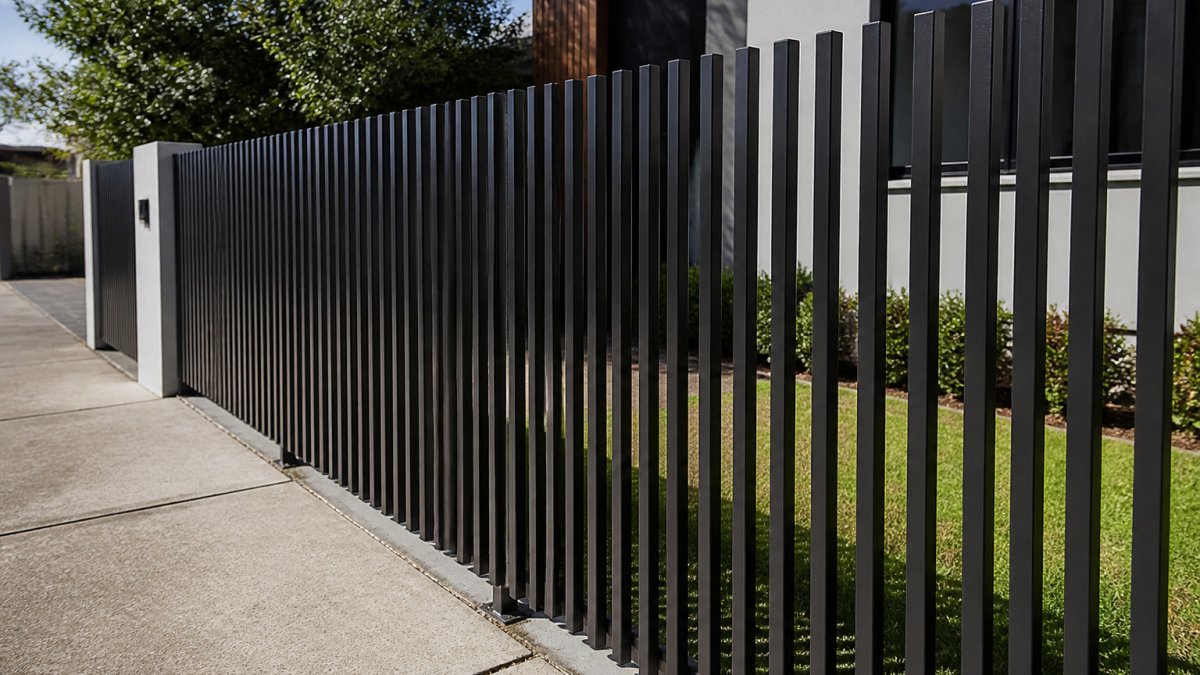
Lattice-top designs split the difference between privacy and aesthetics. The lower section is solid slats for screening, and the upper portion uses a lattice or open-grid pattern. This approach works well if you want privacy at eye level but don't want the fence to feel like a fortress.
The choice between slat and lattice depends on your actual privacy needs. If you're blocking a direct sightline from a neighbour's window or a street-facing property, slat fencing is non-negotiable.
Colorbond Fence Height for Privacy: What You Need to Know
Height matters more than most people realise. A fence that's too short won't deliver the privacy you're paying for. A fence that's too tall can create planning compliance issues or neighbour disputes.
The standard residential privacy fence height in most local council areas is 1.8 metres. This is the typical "full-height" privacy fence and it's usually the maximum allowed without requiring planning approval in residential zones. It blocks sightlines from ground level and provides genuine screening for most situations.
However, 1.8 metres isn't always enough. If your neighbour's property is elevated relative to yours, or if there's significant landscaping on their side, you might need to go higher to achieve actual privacy.
Before committing to any height, check your local council's planning guidelines. Some areas have specific restrictions on fence height in front yards versus rear yards. Boundary fencing regulations can vary significantly between councils, and exceeding the permitted height can result in having to remove or modify the fence at your own cost.
The practical approach: install at 1.8 metres as your baseline. If that doesn't deliver the privacy you need, investigate whether your council permits a higher fence or whether alternative solutions (like strategic landscaping or fence placement) might work better.
Choosing the Right Colorbond Fence Colours
Colour is where Colorbond's flexibility really shines. The material comes in a wide palette, and your choice affects both privacy performance and how your fence integrates with your property.
Darker shades, charcoal, deep grey, black, or forest green, provide maximum visual impact. Dark colours create a solid-looking barrier that genuinely blocks sightlines. They also tend to absorb light, which can make the fence recede visually from your garden perspective.
The trade-off with dark colours is that they can make a garden feel smaller or more enclosed, particularly in shaded areas.
Lighter options, cream, light grey, or pale blue, blend with surroundings rather than dominating them. They reflect light, which can make your garden feel more open. Light-coloured fences are popular in smaller properties or gardens where you want the fence to recede visually.
The downside: lighter colours show dirt, dust, and weathering more obviously. In areas with high pollen or near dusty roads, you'll notice discolouration more quickly.
For best colorbond fencing for privacy, choose the colour based on your garden's character and how prominent you want the fence to be. Dark colours are the practical choice if privacy and low maintenance are your priorities.
Colorbond Fence Maintenance: Keeping Your Privacy Fence in Top Condition
One of the genuine advantages of Colorbond is how little maintenance it actually requires compared to timber. But "low maintenance" doesn't mean "no maintenance."
Annual inspection is the baseline. Walk the fence line and look for any signs of damage: dents, scratches in the powder coat, or rust spots. Colorbond is corrosion-resistant, but the powder coat can be damaged by impact or sharp objects.
Cleaning is straightforward. A garden hose with mild detergent removes most dirt and pollen buildup. In coastal areas or near busy roads, you might need to clean more frequently.
Check the footings and posts annually, particularly after heavy rain or in areas with poor drainage. Water pooling around the base can eventually lead to rust at ground level, even with Colorbond's corrosion resistance.
Vegetation should be kept clear of the fence. Climbing plants or dense shrubs against the fence can trap moisture and accelerate any potential corrosion. A gap of at least 30 centimetres between plants and the fence is ideal.
Most homeowners find that annual cleaning and a visual inspection are sufficient. Unlike timber, you're not sealing, staining, or replacing weathered sections. That's where the real maintenance saving comes from over a 20-year lifespan.
Durability, Weather Resistance, and Long-Term Performance
Colorbond's durability is genuinely impressive. The material is designed to withstand our climate extremes: intense UV exposure, salt spray in coastal areas, temperature swings, and high winds.
The powder-coated finish is the protective layer. It resists fading, chalking, and colour change over time. The base steel underneath is BlueScope steel, which is engineered specifically for local conditions.
Wind load is something worth understanding. Colorbond panels are tested to specific wind ratings, and the structural integrity depends on proper installation. Posts need to be set at the correct depth with proper footings.
In coastal environments, Colorbond performs well because the powder coat and the base steel resist salt spray corrosion. Timber would be rotting within years in the same location. That's a genuine long-term advantage.
Fire resistance is another practical benefit. Colorbond is non-combustible, which matters if you're in a bushfire-prone area. It won't ignite or contribute to fire spread the way timber can. Some councils in high-risk areas actually recommend or require non-combustible fencing for this reason.
Most Colorbond fences installed correctly will perform without significant issues. The powder coat might fade slightly over time, but the structural integrity remains. That's a genuine advantage over timber, which requires ongoing maintenance to prevent rot and weathering.
Professional Installation vs. DIY: What You Should Know
This is where many homeowners make expensive mistakes. Installing a Colorbond fence looks straightforward, it's just panels and posts, but execution determines whether your fence actually performs as intended.
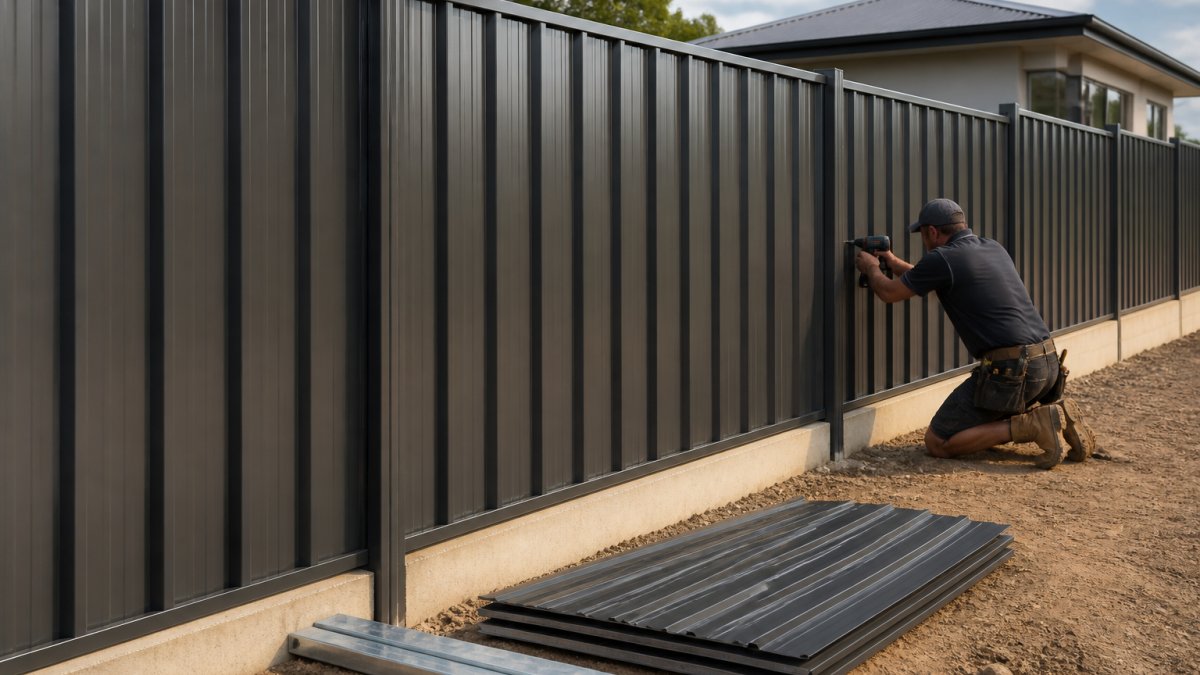
Professional installation handles the critical elements correctly: post depth (typically 600-800mm depending on soil conditions), proper footing in concrete, level alignment, and correct panel attachment. Posts need to be absolutely vertical, or the fence will look wrong and the panels won't sit flush.
DIY installation is possible if you have experience with this type of work. You'll need the right tools (post-hole digger or auger, level, concrete mixer or pre-mixed concrete, fasteners rated for outdoor use). The learning curve is real, though.
The risk with DIY isn't just cosmetic. A poorly installed fence can fail structurally in high winds. It can also create disputes with neighbours if it's visibly out of level or if installation has damaged their property.
Professional installers bring experience with local soil conditions, council requirements, and wind ratings. They have the right equipment and they carry liability insurance if something goes wrong. For a privacy fence that needs to perform reliably, professional installation is usually the practical choice.
Compliance, Warranties, and Peace of Mind
Before installing any fence, understand your local council's requirements. Fence height limits, setback distances from the boundary, and material restrictions vary between councils. Some areas have heritage overlays or specific design guidelines that affect what you can build.
Check whether your fence requires planning approval. Most standard residential privacy fences don't, but it's worth confirming with your council. If your fence exceeds height limits or if you're in a special zone, you might need approval.
Boundary fencing has specific legal considerations. Your fence should be on your property, not the boundary line. If there's any uncertainty about the exact boundary, get a surveyor to mark it before installation. Disputes over boundary fences can become costly and damage neighbour relationships.
Warranties on Colorbond fencing typically cover material defects, depending on the manufacturer. Professional installers usually offer a workmanship guarantee covering their installation. At AK Fencing Vic, we back every installation with a workmanship guarantee because we're confident in our execution. That guarantee means if something fails due to installation error, we'll fix it.
Ask your installer about warranty details before committing. Understand what's covered, what isn't, and how long the warranty lasts. A comprehensive warranty gives you genuine peace of mind that your investment is protected.
Frequently Asked Questions
Is Colorbond fencing good for privacy?
Yes. Colorbond fencing is one of the best privacy options available. The powder-coated steel panels create a solid, full-height barrier that blocks sightlines completely. Unlike timber, Colorbond won't warp, sag, or develop gaps over time, maintaining your privacy year after year. The material's durability means your privacy investment lasts decades with minimal upkeep.
How tall should a Colorbond fence be for privacy?
Most residential privacy fences are 1.8 metres high, which provides complete visual screening from ground level and blocks views from standing height. Check your local council's planning requirements, as some areas have height restrictions for boundary fences. For sloped blocks, a professional installer can engineer the fence to maintain consistent privacy across the slope using retaining walls or stepped footings.
What Colorbond fence colours work best for privacy?
Darker colours like Colorbond Monument, Charcoal, and Deep Ocean create stronger visual impact and make the fence less visible from a distance, blending into the landscape. Lighter shades such as Cream and Surfmist can work if your goal is privacy from direct sightlines while maintaining a softer aesthetic. Choose based on your home's exterior and whether you want the fence to stand out or recede visually.
How do I maintain a Colorbond fence to keep it looking new?
Colorbond requires minimal maintenance. Rinse the fence with water annually to remove dust and salt spray, especially in coastal areas. Avoid high-pressure cleaning, which can damage the powder-coated finish. Inspect fasteners and posts periodically for corrosion. If you notice rust spots, clean the area and apply touch-up paint. Most Colorbond fences need only this basic care to remain in excellent condition.
The best Colorbond fencing for privacy is a practical investment in your property's security, aesthetics, and long-term value. It delivers genuine durability without the constant maintenance that timber requires. When you're ready to install, get professional advice tailored to your specific site conditions and local requirements. Contact AK Fencing Vic for a free, obligation-free quote and let us show you how the right Colorbond fence can transform your property's privacy and appeal.