 Comparison
How to Choose a Vertical Blade Fence That Suits Your Property
Last Updated: November 1, 2026
Quick Summary
A vertical blade fence is a row of upright aluminium blades fixed between rails or inside a panel frame, giving a bold, modern look while letting air and some light through. The right choice depends on privacy needs, airflow, coastal exposure and maintenance preferences. Narrow gaps screen more, while wider gaps increase airflow.
- Narrow gaps of roughly 10-20 mm give strong screening at eye level, with modest airflow.
- Medium gaps of roughly 25-40 mm balance screening and airflow and are the most common residential choice.
- Aluminium does not rust and suits coastal sites, while galvanised steel needs more maintenance over time.
- Check local height and boundary rules, and pool barrier requirements, before finalising spacing.
Table of Contents
- What a Vertical Blade Fence Is and Where It Works Best
- Aluminium Blade Fencing Compared with Galvanised Steel and Other Materials
- Panel Dimensions, Blade Size and Slat Spacing
- Privacy, Airflow and Visibility by Blade Angle and Spacing
- Finishes, Colour Options and Custom Sizing for Vertical Aluminium Fence Panels
- Custom Aluminium Blade Fencing: Sizing, Design and Gates
- Installed Cost, Site Preparation and Aluminium Fence Installation
- Booking Your Vertical Blade Fence Quote with AK Fencing
- Frequently Asked Questions
Choosing a vertical blade fence means balancing privacy, airflow, durability and cost, and the right choice depends on your property. The points below will help you narrow the options before you request a quote.
Blade fencing is a fence built from vertical aluminium slats, called blades, set in a horizontal frame. Because the blades stand upright, the fence can look bold and architectural while still letting air and some light through.
What a Vertical Blade Fence Is and Where It Works Best
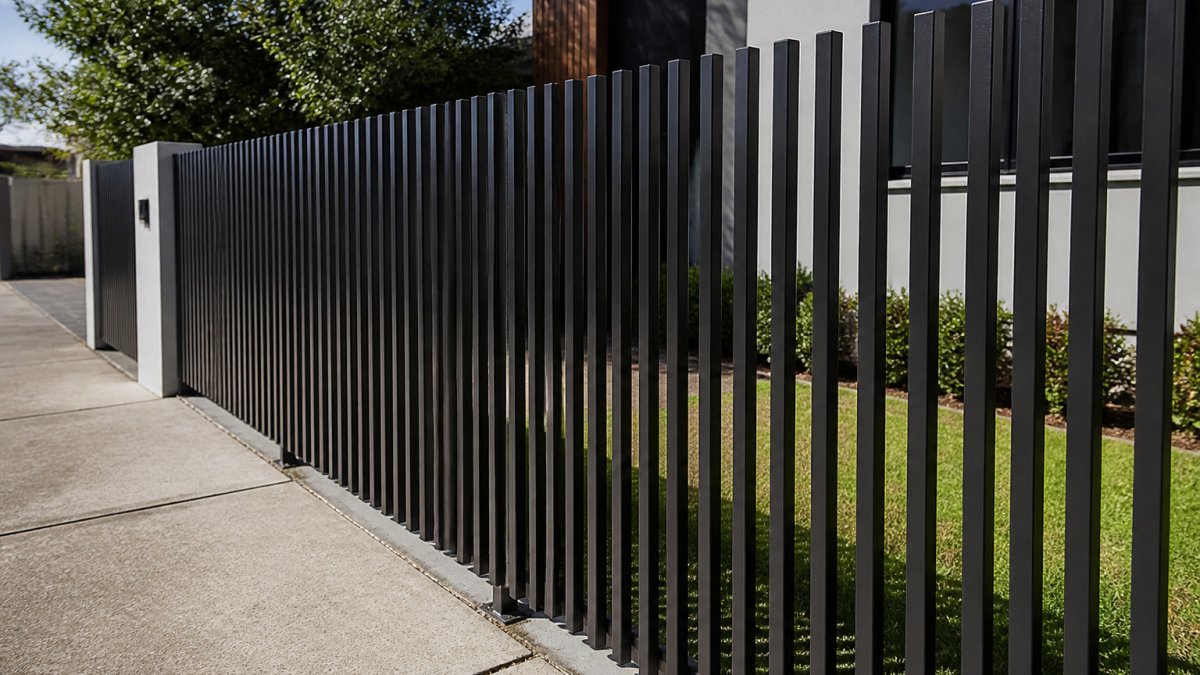
A vertical blade fence is a row of upright blades fixed between rails or inside a panel frame. Blades can face straight on or sit at an angle, and the spacing between them sets how much a passer-by can see through the fence.

Blade fencing suits front boundaries, side boundaries, pool areas and courtyards where you want a clean, modern look. It also works well where you need some privacy without a solid wall that blocks every breeze. Many owners choose it for a contemporary home, while others use it to screen bins, air conditioners or driveways.
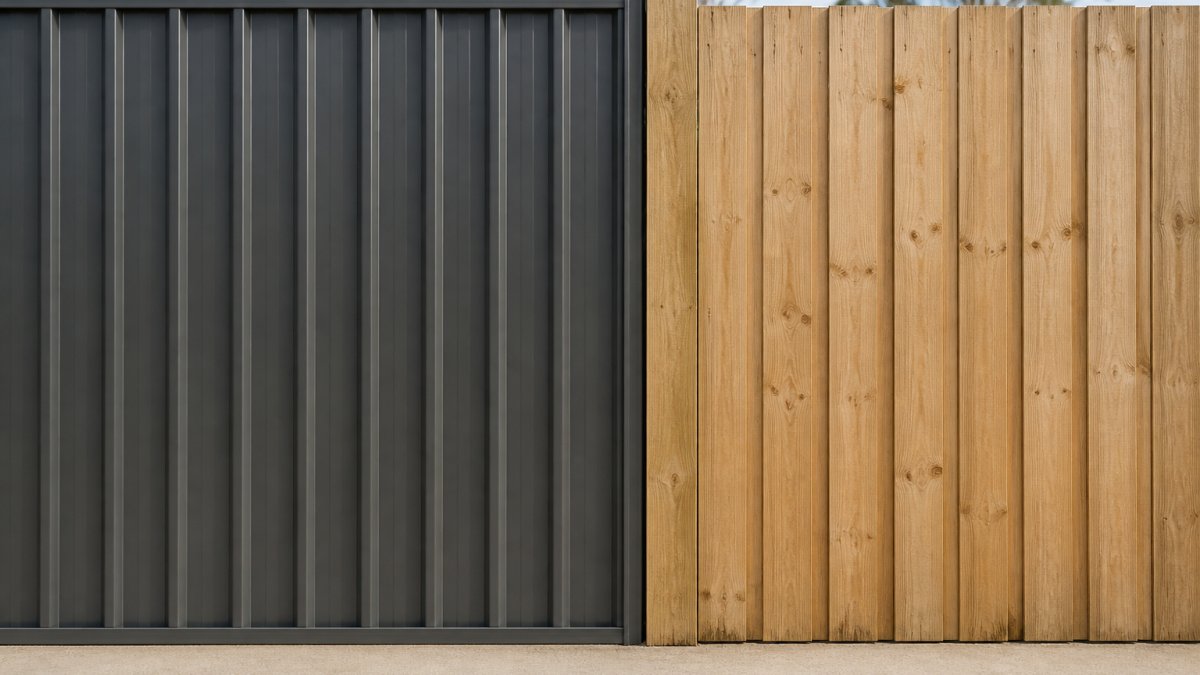
Aluminium Blade Fencing Compared with Galvanised Steel and Other Materials
The right choice depends on coastal exposure, maintenance appetite, weight and budget, so compare the four attributes that actually drive long-term cost: corrosion behaviour, maintenance routine, weight and structural stiffness, and repairability.
| Attribute | Aluminium blade fence | Galvanised steel blade fence |
|---|---|---|
| Corrosion behaviour | Does not rust; mill-finish aluminium forms a natural oxide layer, and powder coating adds a barrier. Suitable for coastal and humid sites when the coating and fixings are specified for the exposure category. | Zinc coating protects the steel, but cut edges, scratches and weld zones are where corrosion starts. Coastal sites need a higher coating mass or duplex system. |
| Maintenance routine | Wash down with fresh water every few months, especially near the coast; touch up coating chips. No repainting cycle under normal residential use. | Inspect coating annually; treat scratches with a zinc-rich primer; expect repainting or re-coating over the service life. |
| Weight and handling | Light enough for one or two people to lift a standard panel, which simplifies DIY and reduces footing loads. | Heavier panels need more labour and larger footings, and are harder to handle on sloping sites. |
| Structural stiffness | Lower modulus than steel, so frame design, blade thickness and post spacing matter more. Ask the installer how the panel is braced for your wind region. | Stiffer per section, so narrower posts or wider spans are sometimes possible, but weight and corrosion trade-offs apply. |
| Repairability | Damaged blades or panels can usually be replaced individually if the system is modular; fully welded panels are harder to patch. | Weld repairs are possible but disturb the coating, so the repair site needs re-protection. |
A common pattern is that aluminium wins on maintenance and coastal suitability, while galvanised steel wins on upfront stiffness per dollar. Neither is universally better. Ask for the coating specification, the fixing material and the wind-load design for your site. Australian Standard AS/NZS 1170 structural design actions guidance sets out the wind actions a fence structure must be designed for, so the frame and post spacing should be checked against your wind region rather than assumed.
For a like-for-like comparison, ask each supplier for the same four numbers: blade wall thickness, post spacing, coating system and fixing grade. Quoting on price alone hides the differences that determine how the fence looks in ten years.
Panel Dimensions, Blade Size and Slat Spacing
Panel height, panel length and blade size all affect the final look and how much privacy you get.
Wider gaps give more airflow and visibility, while narrow gaps give more privacy.
Privacy, Airflow and Visibility by Blade Angle and Spacing
Blade spacing and blade angle are the two settings that decide how much a passer-by can see through the fence, how much breeze passes through and how much light reaches the yard. Treat them as a single decision, not two.
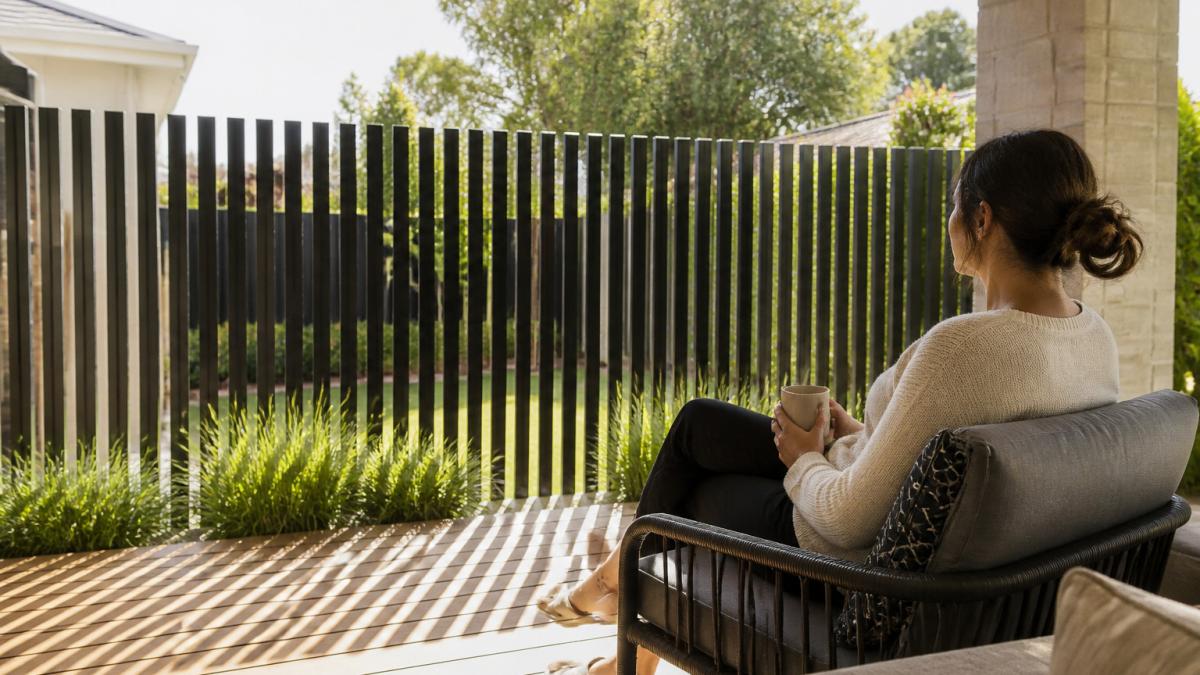
Gap width. The clear gap between blades is the main privacy control. As a rule of thumb:
- Narrow gaps (roughly 10-20 mm) give strong screening from standing eye level on the footpath, with modest airflow.
- Medium gaps (roughly 25-40 mm) balance screening and airflow and are the most common residential choice.
- Wide gaps (roughly 50 mm and above) read as a decorative screen rather than a privacy fence; airflow is high and sightlines are open.
These are starting points, not rules. The view through the fence also depends on blade depth, the distance between the viewer and the fence, and the height of the fence relative to eye level.
Blade angle. Angling the blades changes the sightline without changing the gap. Face-on blades present the widest opening to a viewer standing square to the fence. Angled blades overlap the opening when viewed from one side, so the same gap screens more from the street while letting air through at an angle. The trade-off is directional: an angled blade that screens from the footpath may open up when viewed from the other side, so decide which side needs the privacy. Angle Vertical Blade Fencing shows an angled design with stated spacing.
Light and airflow. Airflow through a blade fence is driven by the open area, which is the gap width divided by the blade pitch (blade width plus gap). A fence with a 30 mm gap and a 65 mm pitch has roughly 46% open area; halving the gap roughly halves the open area. More open area means more breeze and more daylight, but also more visibility. Solid walls block both, which is why blade fencing is often chosen for courtyards and pool areas where some airflow is wanted.
A practical way to choose. Stand where the neighbour or passer-by would stand and look at the proposed fence line. If the concern is overlooking from a two-storey window, gap width alone will not solve it, height, blade angle and sometimes a top screen or lattice section are needed. If the concern is breeze through a courtyard, favour a medium gap with face-on blades. If the concern is street privacy at eye level, favour a narrow gap or an angled blade oriented toward the street.
Finishes, Colour Options and Custom Sizing for Vertical Aluminium Fence Panels
Powder-coated finishes come in several colours, and black and monument are popular for a modern look. The finish affects how the fence weathers and how often you will need to touch it up. Ask for the finish range before ordering so the gate, posts and panels match.
Custom sizing lets you fit the fence to an odd boundary or a sloping block. Confirm the exact dimensions with us before the frame is cut.
Custom Aluminium Blade Fencing: Sizing, Design and Gates
Gates need to be planned with the fence, not added afterwards. Give the installer the gate width, swing direction and any automation you want at the design stage.
Installed Cost, Site Preparation and Aluminium Fence Installation
Pricing depends on quantity, dates and delivery, so there is no single price to quote from. For current pricing, request a free, obligation-free quote from AK Fencing.
Site preparation matters just as much. Check the boundary location, underground services and ground conditions before work starts. Dial Before You Dig service for locating underground assets should be contacted before any digging so that buried services are located first.
Booking Your Vertical Blade Fence Quote with AK Fencing
Choosing the right vertical blade fence comes down to privacy needs, airflow, material and site conditions. Get a free quote from AK Fencing to discuss your property.
Frequently Asked Questions
What is a vertical blade fence?
A vertical blade fence uses upright aluminium slats, called blades, mounted in a horizontal frame between posts. The blades can be set face-on or angled, and they are spaced to control privacy and visibility. Because the blades are open between gaps, the fence lets some light and air through while still blocking views at most angles. It is a common choice for a contemporary look on residential and commercial boundaries,
Are vertical blade fences made from aluminium?
Most vertical blade fences are made from aluminium, which is lightweight, does not rust and needs little maintenance beyond occasional washing. When comparing quotes, check the material, the coating and the warranty rather than assuming all blade fences are built the same way.
Can a vertical blade fence be installed on a sloping block?
Yes, but a sloping block usually changes how the panels are set out and how the posts are footed. Panels can be stepped or raked to follow the ground, and the post footings need to suit the soil and the slope. Uneven terrain may also call for engineered retaining work before the fence goes in.
How much does aluminium blade fence installation cost in Australia?
Pricing depends on panel size, quantity, blade spacing, finish, gate requirements, site access and ground conditions, so there is no single figure that applies to every property. For a figure that reflects your own site, request a free, obligation-free quote from AK Fencing.