 Comparison
Retaining Wall Contractors Melbourne: Reviews & Selection Guide
Table of Contents
- What to Look for in Retaining Wall Contractors
- Retaining Wall Contractor Checklist: Essential Questions Before You Hire
- Signs a Retaining Wall Is Failing: What to Know Before Repair or Replacement
- Retaining Wall Cost per m² in Australia: Understanding Pricing and Value
- Retaining Wall Installation Warranty: What Your Guarantee Should Cover
- How to Evaluate Contractor Reviews and Avoid Hidden Costs
- Conclusion: Choosing a Reliable Retaining Wall Contractor
- Frequently Asked Questions
Last Updated: October 18, 2026
What to Look for in Retaining Wall Contractors
Choosing the right retaining wall contractors Melbourne offers is one of the most important decisions you'll make for your property. A poorly built wall fails faster, costs more to repair, and puts your home at risk. The difference between a reliable contractor and an unreliable one comes down to a few critical factors most homeowners miss until it's too late.
When evaluating retaining wall contractors, focus on three core areas: structural competence, transparency, and accountability. A contractor who rushes the site assessment, avoids detailed written quotes, or can't explain drainage is signalling problems ahead. At AK FENCING VIC PTY LTD, we prioritise understanding each site's soil conditions, water management needs, and compliance requirements.
The best contractors ask detailed questions before quoting: soil type, water runoff patterns, slope gradient, and what failed if you're replacing a wall. They inspect the site rather than measuring from the kerb, explain why certain materials suit your conditions, and discuss permits and engineering upfront, not as a mid-project surprise.
Look for contractors who are fully licensed and insured. Verify their insurance covers both public liability and professional indemnity. Ask for evidence of current registration with relevant industry bodies. A contractor who balks at providing these details isn't someone you want digging into your backyard.
Retaining Wall Contractor Checklist: Essential Questions Before You Hire
Before you sign a contract, get clear written answers to these questions from any reputable retaining wall contractor.
Site Assessment and Design:
- Have you inspected the site and assessed soil type, drainage, and slope angle?
- Will you provide a written site assessment and design plan?
- Do you recommend engineering for this project, and if so, who will handle it?
- How will you manage water drainage behind and beneath the wall?
Materials and Construction:
- What materials are you recommending, and why are they suited to this site?
- How deep will the foundations go, and what compaction will you use?
- What warranty covers materials and workmanship?
- Can you provide examples of similar walls you've built that have lasted 10+ years?
Permits and Compliance:
- Will you obtain all necessary permits, or is that my responsibility?
- Are you familiar with local council requirements for retaining walls in this area?
- How will you ensure the wall meets engineering standards for the slope height and soil type?
Pricing and Timeline:
- Is the quote itemised by material, labour, and site works?
- What happens if ground conditions differ from the initial assessment?
- How long will the project take, and what could delay it?
- What's included in the final price, and what costs extra?
Communication and Support:
- How will you communicate progress during the build?
- What's your process if I spot issues during construction?
- Will you be available for post-installation support, and for how long?
- How do I contact you if problems arise after the work is finished?
Thorough written answers show a contractor has thought the project through properly. Vague answers or reluctance to commit to specifics is a red flag.
Signs a Retaining Wall Is Failing: What to Know Before Repair or Replacement
Understanding when a retaining wall is failing helps you decide between repair, reinforcement, or full replacement. Catching problems early can save thousands in damage.
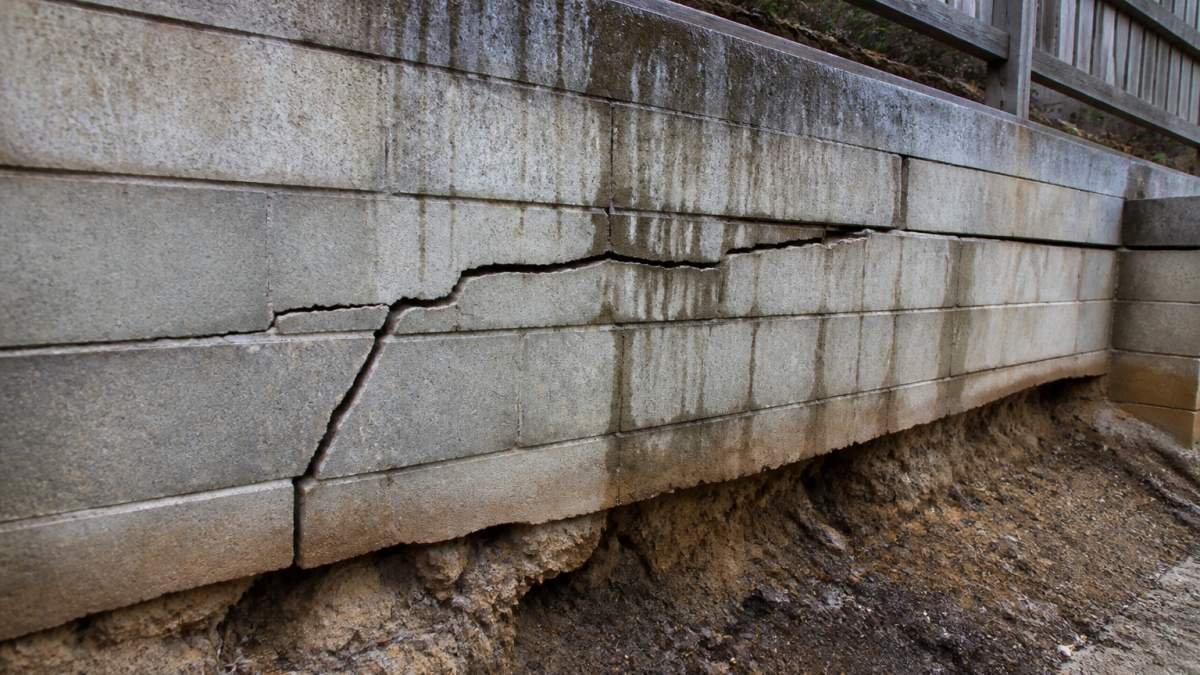
Visible cracks are the first warning sign. Horizontal cracks indicate soil and water pressure behind the wall; vertical cracks suggest settlement or freeze-thaw damage. Cracks wider than 3mm or growing over weeks are serious.
Bulging or bowing means the wall is losing structural integrity.
Water seepage or dampness behind or below the wall indicates drainage failure. Trapped water increases pressure and accelerates deterioration. Wet patches, efflorescence (white salt deposits), or pooling at the base mean drainage has broken down.
Soil erosion at the base suggests the foundation is being undermined.
Displaced or missing blocks in timber or composite walls indicate material failure or structural movement. Shifting, cracking, or rotting blocks mean load-bearing capacity is compromised.
Vegetation growth on or through the wall seems minor but signals moisture retention and structural weakness; roots penetrating mortar or blocks accelerate deterioration.
If you notice any of these signs, have the wall assessed by a structural engineer or experienced retaining wall contractor before damage spreads to your property or neighbouring land.
Retaining Wall Cost per m² in Australia: Understanding Pricing and Value
Retaining wall pricing varies significantly with materials, site conditions, height, and complexity. Understanding what drives costs helps you evaluate quotes fairly and avoid being undercut by contractors cutting corners.
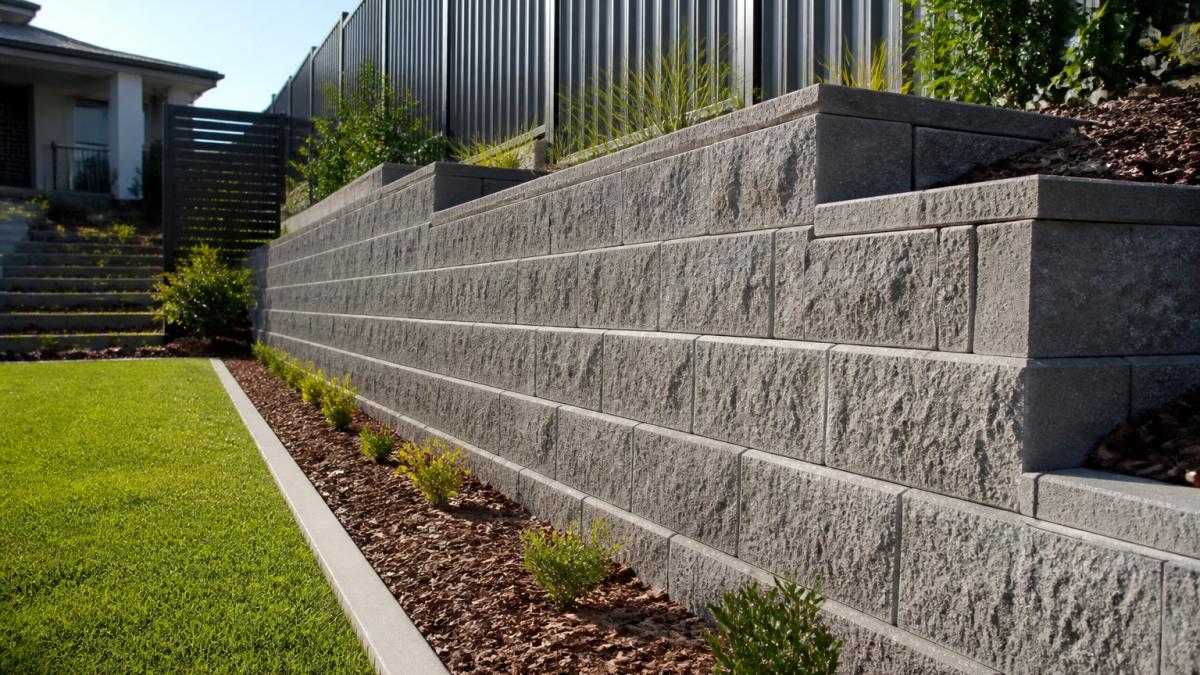
Material choice is primary: concrete block, timber, and stone walls each carry different material and labour costs. Site accessibility matters enormously, heavy machinery or confined spaces raise costs. Soil conditions affect foundation depth and preparation time, and steep slopes or poor drainage require more engineering and labour.
Height and length determine total scope: a 1-metre wall across 10 metres is a different project from a 2-metre wall across 50 metres.
When comparing quotes from retaining wall contractors Melbourne, look for itemisation. A reputable contractor breaks down costs by material, labour, site preparation, drainage, and any engineering or permits; single "per metre" figures without detail are harder to assess fairly.
The cheapest quote often reflects cost-cutting, not efficiency. Underbidders typically cut corners on foundation depth, compaction, drainage, or material quality, savings that appear immediately in the price but cost you years later in repairs.
Ask each contractor how pricing would change if ground conditions differ from the site assessment. Vague answers usually mean mid-project surprises; transparent contractors explain what variations trigger price changes and by how much.
Retaining Wall Installation Warranty: What Your Guarantee Should Cover
A workmanship guarantee protects you against defects and poor construction. Understanding what a good warranty covers helps you avoid contractors who disappear after installation.
Material warranties typically come from the manufacturer and cover product defects. A 10-year material warranty is standard for quality concrete blocks; timber warranties vary by treatment and exposure. Ask what the material warranty actually covers: does it include labour to replace defective materials, or just the materials themselves?
Workmanship warranties cover installation quality, your protection if the wall fails due to poor construction, inadequate foundation, improper drainage, or faulty assembly. A solid workmanship warranty runs 5-10 years and covers remedial work for contractor error.
What should a good workmanship warranty include?
- Structural failure or movement beyond normal settlement
- Water penetration or drainage failure caused by poor installation
- Material defects that result from faulty workmanship
- Cracks wider than specified tolerances appearing within the warranty period
- Bulging, bowing, or displacement caused by construction error
What it typically doesn't cover:
- Damage from events outside the contractor's control (extreme weather, earthquakes, major flooding)
- Damage from changes to the site after installation (excavation nearby, additional loading, water source changes)
- Wear and tear or normal weathering
- Damage from poor maintenance or neglect
Before you hire, get the warranty in writing. Ask what's covered, what isn't, how long it runs, and the claims process. A contractor who won't provide a written warranty or is vague about coverage won't stand behind their work.
At AK FENCING VIC PTY LTD, we back every retaining wall installation with a workmanship guarantee. If an issue arises within the warranty period due to our installation, we return and fix it.
How to Evaluate Contractor Reviews and Avoid Hidden Costs
Online reviews are useful but incomplete. Reading them critically helps you separate genuine feedback from outliers and spot red flags.
Look for pattern consistency. One negative review among dozens of positive ones might be a difficult client or an isolated incident. Multiple reviews mentioning the same problem (late delivery, poor communication, unexpected costs) indicate a real pattern.
Check review recency. A contractor with excellent reviews from five years ago but no recent reviews might have changed.
Read for specifics. Vague reviews ("great job, would recommend") are less useful than detailed ones.
Watch for hidden cost complaints. If multiple reviews mention unexpected charges, scope creep, or costs ballooning mid-project, the contractor likely isn't transparent about pricing or doesn't manage site conditions well.
Verify the reviewer's situation resembles yours. A review from someone who had a simple fence repair might not predict your experience with a complex retaining wall.
Check how the contractor responds to negative reviews. A contractor who dismisses criticism or doesn't engage constructively is signalling poor customer service.
Ask for references directly. Reviews are public feedback, but asking the contractor for three references from recent projects gives you a chance to ask specific questions about communication, timeline adherence, and post-installation support.
Hidden costs often emerge when contractors haven't properly assessed site conditions or haven't communicated what variations might trigger price changes. Before you hire, ask the contractor to explain in writing what conditions might change the scope and cost. A contractor who can't or won't do this is likely to surprise you later.
Conclusion: Choosing a Reliable Retaining Wall Contractor
Selecting a retaining wall contractor is a significant investment in your property's safety and longevity. The right contractor understands soil mechanics, manages drainage properly, communicates clearly, and stands behind their work. The wrong contractor cuts corners, disappears after installation, and leaves you with a failing wall and a depleted budget.
When you're ready to move forward, get a free quote from AK FENCING VIC PTY LTD. Our fully licensed and insured team conducts thorough site assessments, provides transparent itemised quotes, and backs every installation with a workmanship guarantee. We handle everything from initial design through to final completion, so you're never left managing multiple contractors or unclear responsibilities. Contact AK FENCING VIC PTY LTD for a free obligation-free quote and let our team show you how proper planning and professional execution protect your investment for years to come.
Comparison Table: What to Expect from Retaining Wall Contractors
| Contractor Quality Indicator | Best Practice | Red Flag |
|---|---|---|
| Site Assessment | Visits site, assesses soil, documents slope angle | Quotes without visiting or measuring |
| Quote Format | Itemised by material, labour, drainage, permits | Single "per metre" figure with no detail |
| Warranty | Written workmanship guarantee, 5-10 years | No warranty or verbal assurance only |
| Communication | Regular updates during project, responds quickly | Difficult to reach, vague about progress |
| Hidden Cost Disclosure | Explains what conditions might change scope | Surprises you mid-project with cost increases |
| References | Provides three recent project references | Reluctant to provide references |
| Licensing | Fully licensed, insured, verifiable | Unlicensed or can't provide proof |
| Reviews | Consistent positive feedback, specific details | Pattern of complaints about costs or communication |
Frequently Asked Questions
How much does a retaining wall cost per m² in Australia?
Retaining wall cost per m² varies significantly based on materials, soil conditions, height, and site access. Concrete, timber, and Colorbond options each have different price points. Contact a fully licensed contractor for a detailed site assessment and obligation-free quote, as ground conditions and drainage requirements directly affect final cost.
What should I check in retaining wall contractor reviews?
Look for reviews mentioning workmanship quality, punctuality, communication, and how the contractor handled unexpected site conditions. Verify the contractor is fully licensed and insured. Check whether customers specifically mention warranty support after installation and whether the contractor finished projects on time without hidden cost increases.
How can I tell if a retaining wall is failing?
Signs include visible cracks, bulging or leaning walls, water seepage or dampness, soil erosion at the base, and settling of nearby structures. If you notice these issues, have a qualified contractor inspect the wall immediately. Early detection prevents collapse and costly emergency repairs to your property.
What does a retaining wall installation warranty typically cover?
A solid warranty should cover workmanship defects, material failures, and structural issues for a defined period. Ask your contractor specifically what the guarantee covers and what happens if repairs are needed post-installation. Transparent contractors provide written warranty terms before work begins.