 how-to
How to Tell if a Retaining Wall is Failing: A Homeowner's Guide
Table of Contents
- Visual Signs Your Retaining Wall is Failing
- How to Distinguish Cosmetic Cracks from Structural Damage
- Retaining Wall Drainage Issues and Water Damage
- Soil Pressure, Ground Movement, and Wall Stability
- Conducting a Retaining Wall Structural Inspection
- Assessing Urgency: When to Act Immediately
- Understanding Retaining Wall Repair Costs and Options
- Frequently Asked Questions
Last Updated: October 5, 2026
Visual Signs Your Retaining Wall is Failing
A retaining wall failing shows clear warning signs: bulging, cracking, leaning, and water damage. Catching these early prevents collapse and protects your property.
Bulging and bowing sections
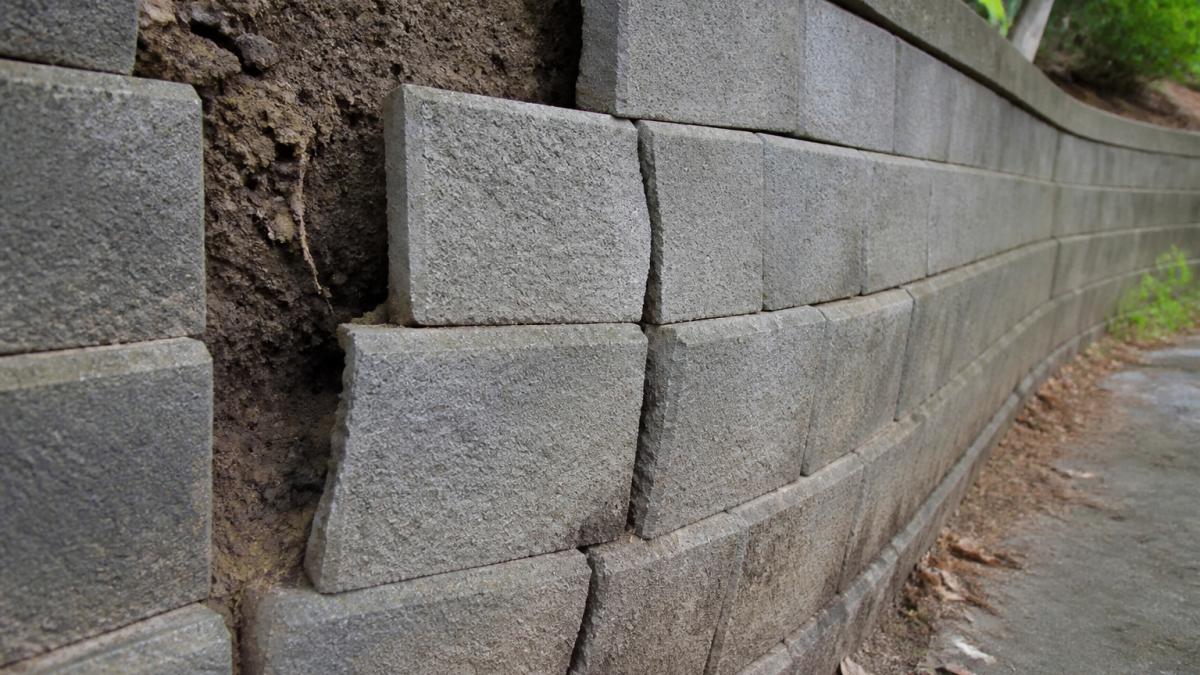
Bulging happens when soil pressure pushes outward against the wall, curving it away from the property.
Bowing is similar but shows as a wave pattern. Both mean the wall is losing its battle against soil pressure.
Stand back and look along the wall's length.
Minor bulging (under 50mm) may be cosmetic; over 100mm signals real structural stress. Measure from a reference point to track changes.
Leaning or tilting
A wall tilting away from the property is losing stability, usually because the base settles unevenly or soil pressure shifts the structure.
Place a long straight edge against the wall's face. A gap means tilting; the bigger the gap, the worse the tilt.
Tilting is more serious than bulging, the foundation is moving and needs urgent attention.
Cracked blocks and joints
Cracks appear in two patterns: structural and cosmetic.
Cosmetic cracks are hairline fractures under 3mm wide in mortar joints or block surfaces. They don't compromise strength but signal moisture movement.
Structural cracks are wider, deeper, often diagonal, and run through blocks rather than joints. Cracks wider than 5mm or growing over months are structural damage.
Horizontal cracks are especially concerning, suggesting the wall is bending under pressure. Vertical cracks near edges can mean settlement or movement.
Shifting and displaced blocks
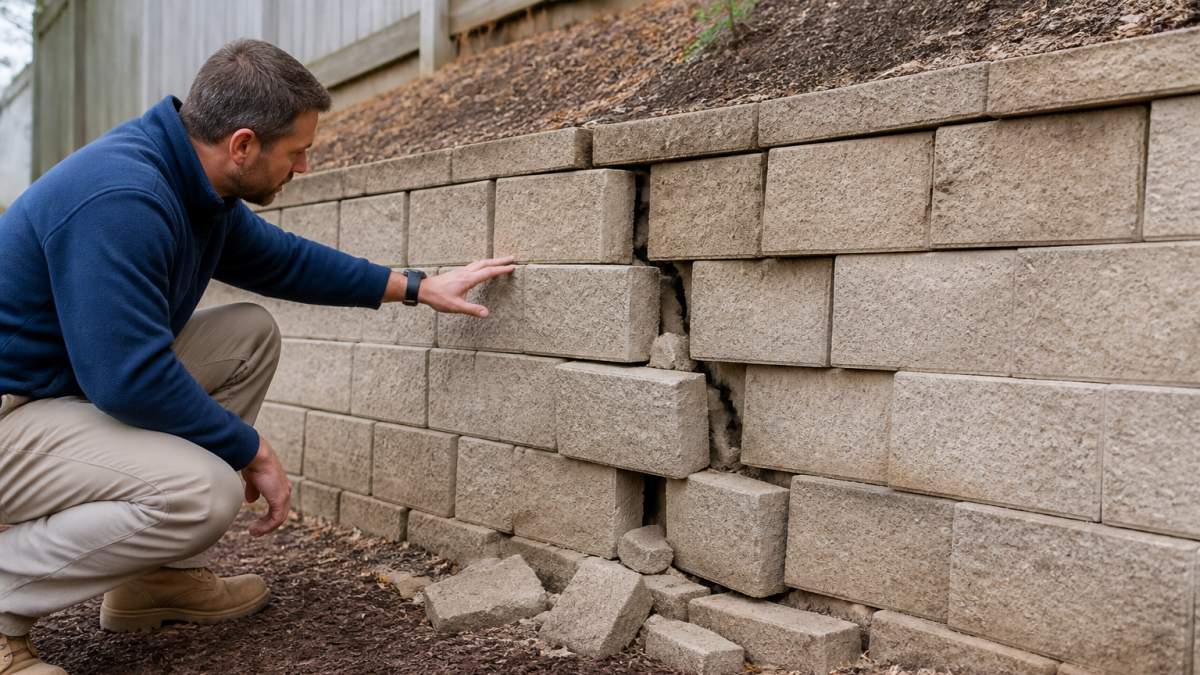
Blocks out of alignment show the wall is failing. Protruding or sunken blocks and gaps indicate movement.
Run your hand along the wall's face; it should feel smooth. Steps or offsets mean the wall is unstable.
Displaced blocks often appear near the top or bottom, where pressure concentrates. Repair work is urgent.
How to Distinguish Cosmetic Cracks from Structural Damage
Cosmetic cracks stay under 3mm, don't grow, and are confined to mortar joints or block surfaces.
Structural cracks are wider than 5mm, run through blocks diagonally or horizontally, and grow over weeks or months.
Track cracks over time: mark the ends with a pencil, note the date, and check monthly.
Cracks following mortar joints in straight lines are usually cosmetic; cracks cutting through blocks at angles are usually structural.
Retaining Wall Drainage Issues and Water Damage
Water is the single biggest cause of retaining wall failure. When drainage behind a wall is blocked, absent or undersized, water accumulates in the backfill and creates hydrostatic pressure pushing the wall outward. Saturated soil also weighs substantially more than dry soil, so the wall fights added weight and pressure at once. Walls that fail after heavy rain were usually holding water for months beforehand.
The drainage components to check
A properly built retaining wall has a drainage system behind it. Each component can fail on its own:
- Weep holes, small openings through the wall face that let trapped water escape. They should be spaced at regular intervals near the base and sit slightly above ground level so water can run away rather than pool.
- Aggie drain (perforated pipe), a slotted pipe running along the base of the wall behind the backfill. It collects water and carries it to an outlet.
- Gravel or crushed rock backfill, a free-draining layer immediately behind the wall that lets water fall to the aggie drain instead of pressing against the wall face.
How to check each one
Work through the system methodically:
- Weep holes. Look for openings along the base of the wall. If you can't see any, the wall may have no drainage at all. If you can, check whether they're clear. A weep hole that is dry in the middle of a wet period, or one with soil or roots poking out, is likely blocked.
- Water flow after rain. Go out during or shortly after heavy rain. Water should trickle or drip from the weep holes and then stop within a day or two. If water pours out for days, or if no water comes out at all while the soil behind is saturated, the system is not working.
- Staining and damp patches. Water staining, efflorescence (white salt deposits), moss or dark damp patches on the wall face point to water sitting behind the wall rather than draining away.
- The outlet. Find where the aggie drain discharges. If it's buried, blocked or discharging back against the wall, the whole system is effectively dead.
- Soil erosion at the base. Soil washing out from under or behind the wall means water is finding its own path because the intended one is blocked.
What blocked drainage does over time
When drainage fails, the sequence is predictable: water builds up, the soil becomes heavier and pushes harder, and a retaining wall failing deflects and cracks open.
No weep holes, no aggie drain or no gravel backfill is a design or construction defect, not a maintenance issue.
Soil Pressure, Ground Movement, and Wall Stability
Retaining walls fail when outward forces exceed what the wall and foundation can resist. Knowing where those forces come from helps you interpret what you see.
What actually creates the pressure
- Retained soil weight. The taller the wall, the greater the load. A wall retaining one metre of soil carries far less pressure than one retaining three metres, and the increase is not linear.
- Water in the backfill. Saturated soil is heavier than dry soil, and water itself exerts hydrostatic pressure. This is why most failures happen during or shortly after prolonged wet weather.
- Surcharge loads. Anything sitting on the soil above or behind the wall adds load, a driveway, a shed, a parked car, stockpiled materials, or even a neighbour's raised garden bed. Surcharge is one of the most commonly overlooked causes of wall movement.
How the same symptom means different things on different walls
Warning signs look similar across wall types, but the mechanism and urgency often differ:
- Segmental block walls. These rely on interlocking units, a compacted base and often geogrid reinforcement. Bulging usually means the base has moved, the geogrid is missing or the drainage has failed. Blocks stepping out of alignment is a strong sign of movement.
- Timber walls. Timber sleepers rot, split and lose strength over time, particularly where they stay damp. Leaning is common because the posts or embedded sections decay. Look for soft timber, splitting along the grain and insect damage as well as movement.
- Concrete walls. Reinforced concrete is rigid, so failure tends to show as cracking rather than gradual bowing. Horizontal and diagonal cracks running from corners are the ones to watch. Rust staining can indicate corroding reinforcement.
Reading the direction of movement
Where and how the wall has moved tells you a lot about the cause:
- Top leaning out, base stable, often a drainage or surcharge problem pushing the upper section.
- Whole wall tilting, usually a foundation or base failure, which is more serious.
- Bulging in the middle, pressure building behind the wall, frequently from water or poorly compacted backfill.
- Localised displacement, often a single failed section, a broken drain or a point load above.
When to get a structural assessment
If the wall is tilting, bulging more than 50mm, showing cracks wider than 5mm, or has moved noticeably over a short period, get a structural assessment. A qualified structural engineer or experienced retaining wall contractor can determine whether it can be stabilised or needs rebuilding. Stabilisation options such as improved drainage, tie-backs or buttresses depend on the wall's remaining integrity and the cause of movement.
guidance on retaining wall design and drainage
Conducting a Retaining Wall Structural Inspection
A systematic inspection catches problems early. You don't need an engineering degree, just thoroughness and consistency.
Monthly visual checks
Once a month, walk around the wall and look for changes.
- Check for new or wider cracks
- Look for bulging or tilting
- Scan for displaced blocks or mortar failure
- Look for water seeping or pooling
Take photos monthly from the same angle and compare anything new to last month's photo.
Document concerns with dates and photos so a professional can judge the wall's condition and deterioration rate.
Seasonal monitoring schedule
Winter (June to August): Check weekly for water damage, seeping and new cracks; wet soil creates maximum pressure.
Spring (September to November): Inspect for winter water damage, erosion, displaced blocks or new bulging.
Summer (December to February): Check monthly for drying cracks (cosmetic) versus structural cracks.
Autumn (March to May): Monitor for settling as soil dries. Check that the wall hasn't tilted or shifted.
Keep a simple log of dates, observations and photos.
Assessing Urgency: When to Act Immediately
Some retaining wall problems need immediate action. Others can wait for a professional assessment.
Act immediately if you see:
- Bulging greater than 100mm
- Tilting visible without tools
- Cracks wider than 10mm
- Blocks actively shifting or falling
These signs mean the wall is failing now. Contact a qualified structural engineer or experienced retaining wall contractor right away.
Schedule professional inspection within 1-2 weeks if you see:
- Bulging between 50-100mm
- New cracks appearing monthly
- Significant water seeping
- Displacement of a few blocks
These indicate deterioration but not immediate danger. A professional can assess whether repair or replacement is needed.
Monitor over time if you see:
- Hairline cracks in mortar joints
- Minor water staining
- Very slight bulging (under 50mm)
- Occasional loose debris
These are early warning signs. Monitor monthly and escalate if they worsen.
Understanding Retaining Wall Repair Costs and Options
Repair options depend on the wall's condition, height, and materials.
Stabilisation reinforces the wall without rebuilding it, adding drainage, tie-backs or buttresses.
Partial rebuilding replaces the damaged section if only part of the wall is failing.
Full replacement removes the old wall and builds new.
Costs vary widely by height, length, materials and site conditions.
Ask contractors what's included and what might change during the work.
Retaining wall failure doesn't happen overnight.
If you're seeing warning signs, get a professional assessment, an inspection costs far less than emergency repairs or replacement. Our fully licensed team can assess your wall's condition, explain your options and deliver a solution backed by our workmanship guarantee. Get a free quote today and protect your property.
Frequently Asked Questions
What are the early warning signs of a failing retaining wall?
Early warning signs include small cracks in blocks or joints, slight bulging or bowing, minor water seepage, and visible displacement of blocks. Check your wall monthly during wet seasons and after heavy rain. These early indicators often appear months or years before serious structural failure, giving you time to address the issue before safety becomes critical.
How do I know if cracks in my retaining wall are serious or just cosmetic?
Hairline cracks (less than 3mm wide) that are stable are usually cosmetic. Serious cracks are wider than 5mm, grow over time, appear in a stair-step pattern through mortar joints, or run horizontally across the wall. Measure cracks with a ruler and photograph them monthly. If they widen noticeably within weeks, or if the wall is moving, the damage is structural and requires professional assessment.
What causes retaining wall drainage issues and why do they matter?
Poor drainage allows water to accumulate behind the wall, increasing hydrostatic pressure on the structure. This pressure forces the wall outward, causing bulging, bowing, and accelerated failure. Check that weep holes are clear, water drains away from the base, and the backfill soil isn't compacted too tightly. Water pooling at the wall's base or seeping through joints signals drainage failure that needs urgent attention.
When should I hire a professional for a retaining wall structural inspection?
Hire a professional engineer or qualified surveyor if you notice bulging wider than 25mm, horizontal cracks, rapid movement, water seeping from multiple points, or displacement of blocks. If the wall is over 1.5 metres tall, supports a building, or shows multiple warning signs, professional inspection is essential. A structural assessment costs far less than emergency repair or replacement and confirms whether the wall can be repaired or must be rebuilt.