 blog
Automated Gate Systems for Commercial Properties
Table of Contents
- Why Automated Gate Systems Matter for Commercial Properties
- Understanding Commercial Gate Access Control Systems
- Automated Sliding Gates: Operation and Advantages
- Swing Gates and Boom Barriers for Vehicle Access
- Commercial Gate Safety Features You Need
- Industrial Gate Maintenance and Reliability
- Choosing the Right Automated Gate System for Your Site
- Frequently Asked Questions
Last Updated: October 14, 2026
Why Automated Gate Systems Matter for Commercial Properties
Automated gate systems are essential infrastructure for modern commercial properties, delivering both security and operational efficiency. At AK FENCING VIC PTY LTD, we understand that choosing the right automated gate system requires balancing access control, safety, durability, and cost. A well-designed automated gate system reduces unauthorised access, simplifies vehicle traffic flow, and enhances your property's professional appearance, all while minimising manual labour.
The difference between a manual gate and an automated one extends beyond convenience. Automated systems provide consistent perimeter security, logged access records, and integration with broader property management systems. For commercial properties managing high traffic volumes, the operational savings alone justify the investment. The real challenge isn't deciding whether to automate, it's selecting the right system for your specific site needs.
Understanding Commercial Gate Access Control Systems
Commercial gate access control systems combine physical barriers with intelligent management software to regulate who enters your property and when.
The core function is straightforward: an authorised vehicle or person approaches, presents credentials to the access reader, the controller verifies permissions, and the gate operator opens automatically. What makes this powerful is the data trail. Every access event is recorded, creating an audit log of who entered when.
Integration is where modern systems shine. Your access control system can communicate with CCTV cameras, intercom systems, and even building management platforms. A visitor arriving at the gate triggers an intercom alert to the office. A delivery vehicle's number plate is captured and cross-referenced against approved vendors.
Automated Sliding Gates: Operation and Advantages
How sliding gates work
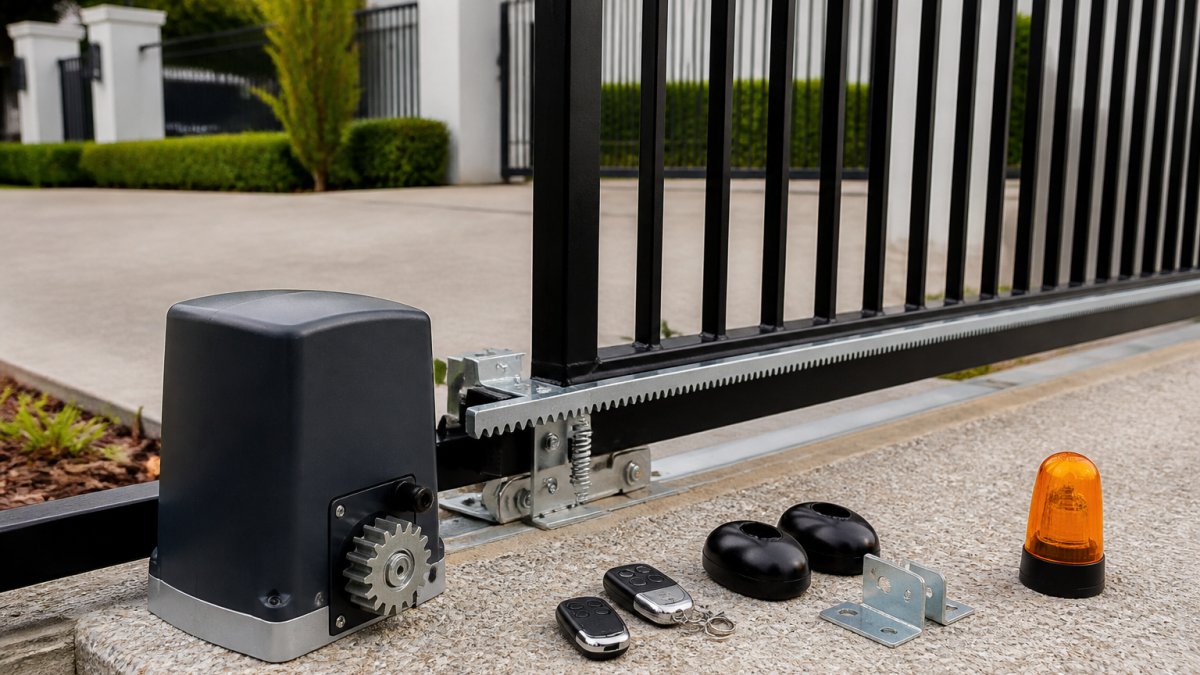
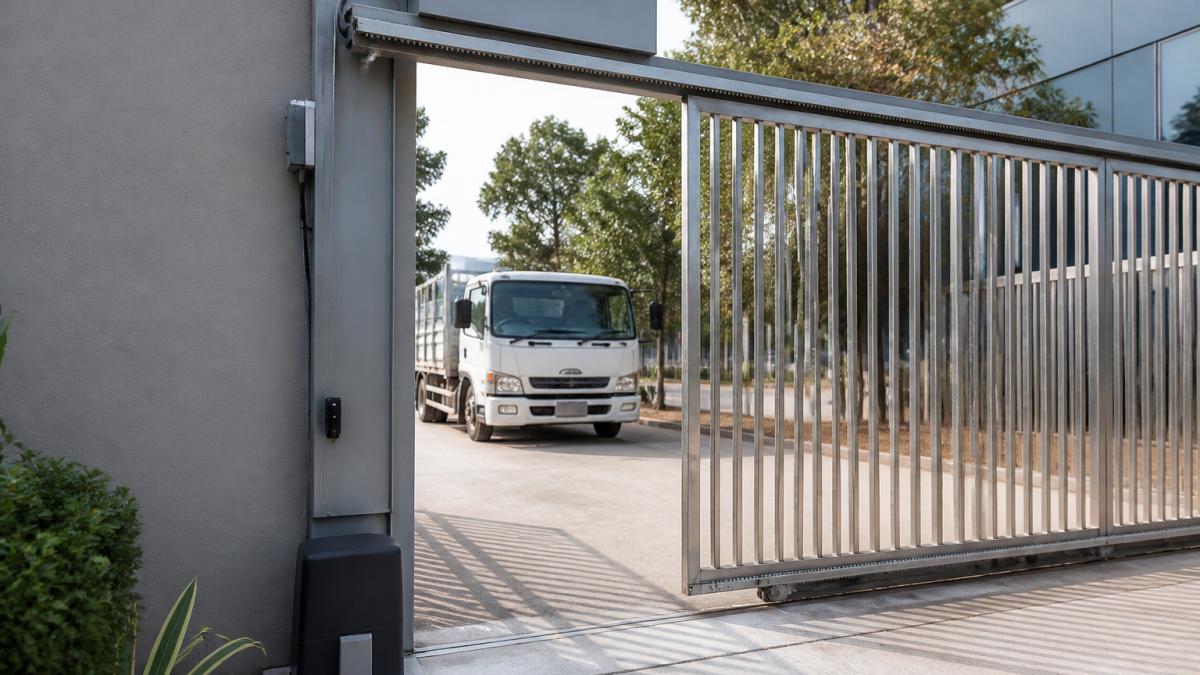
Sliding gates operate by rolling along a ground-mounted or overhead track. As the access reader confirms authorisation, the gate operator engages a motor that drives the gate smoothly along the track. The gate slides parallel to the fence line, requiring no swing space on either side. This design makes sliding gates ideal for narrow entrances, high-traffic areas, or properties where space is at a premium.
The motor mechanism typically uses either a chain drive or belt drive system. Chain drive systems are strong and handle heavy gates well, though they require periodic lubrication. Belt drive systems are quieter and lower-maintenance but may not suit the heaviest industrial applications. Both approaches offer reliable operation when properly installed and maintained.
Safety sensors are built into the sliding gate system. Photo-electric sensors detect obstructions in the gate's path and trigger an immediate stop. This prevents the gate from crushing vehicles or people caught in the opening or closing cycle. Modern systems also include manual override capabilities, ensuring emergency access even if the motor fails.
Best applications for sliding gates
Sliding gates excel in high-traffic commercial environments. Retail centres, industrial estates, and logistics facilities benefit from the rapid opening and closing cycle. A sliding gate can open and close in 10-15 seconds, minimising vehicle queue times during peak hours. For properties with limited perimeter space, the parallel-sliding design avoids the obstruction issues that swing gates create.
Sliding gates are also the preferred choice for properties with uneven terrain or sloping driveways. Unlike swing gates that require level ground for smooth operation, sliding gates handle gradients effectively. This makes them particularly suitable for hillside commercial properties where terrain engineering is complex.
The durability of sliding gates is notable. With fewer moving parts than swing gates and no hinges under constant stress, sliding gates experience less wear. The track system distributes load evenly, reducing strain on any single component. For commercial properties running 24/7 operations, this reliability translates to fewer service calls and lower downtime risk.
Swing Gates and Boom Barriers for Vehicle Access
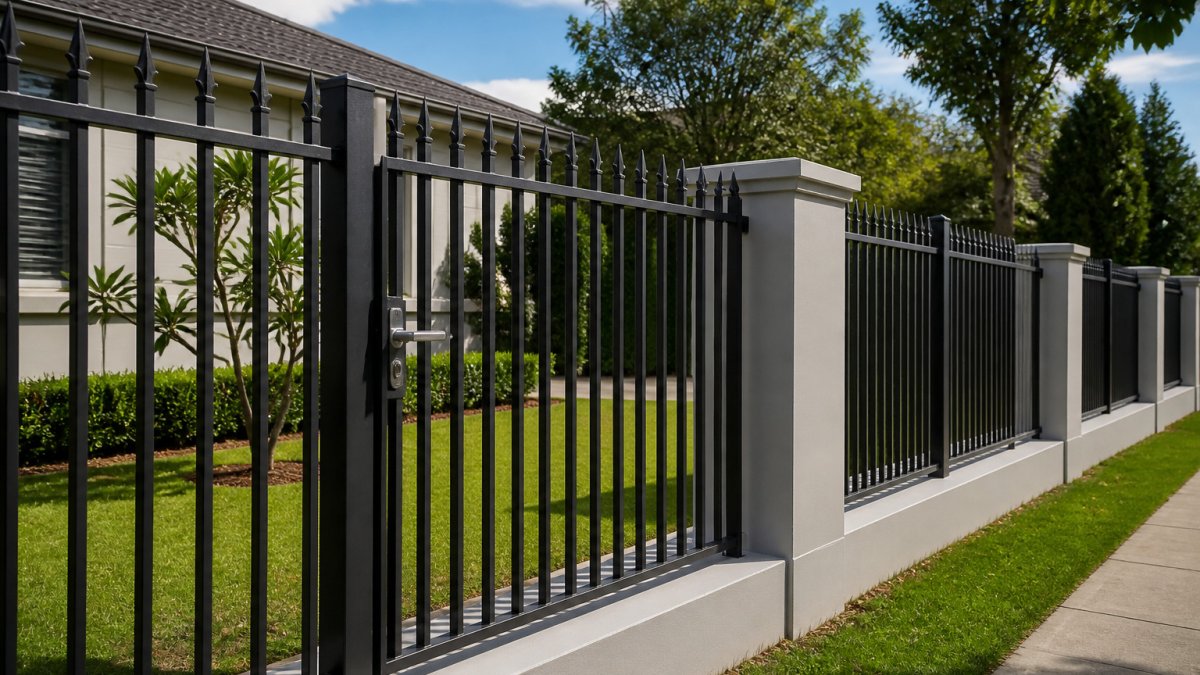
Swing gates operate on a hinge mechanism, swinging inward or outward from a fixed post. They're the traditional choice for many commercial properties and remain popular for mid-range traffic volumes. A swing gate can accommodate heavier, more ornamental designs, giving your property entrance a more finished aesthetic than sliding alternatives.
Boom barriers (also called boom gates) are the lightweight option for vehicle-only access. A horizontal arm rises to block or allow vehicle passage. They're ideal for car parks, loading docks, and access-controlled driveways where pedestrian access isn't required.
The trade-off with swing gates is space. A swing gate requires clearance on one side of the entrance equal to the gate width. On narrow properties or busy roads, this can be impractical. Boom barriers avoid this issue entirely, but they only manage vehicles, not pedestrian traffic.
Cantilever gates represent a hybrid approach. They hang from an overhead structure, eliminating the need for ground-level hinges. This design works well on sloped terrain and reduces maintenance points compared to traditional swing gates. Cantilever gates are heavier and more expensive to install, but they offer excellent durability for demanding industrial applications.
Commercial Gate Safety Features You Need
Compliance and emergency access
Gate safety isn't optional, it's regulated. Your automated gate system must comply with relevant safety standards and emergency access requirements. In Australia, automated gates are subject to Australian Standards for gate safety and access. These standards mandate specific sensor types, stopping distances, and manual override capabilities.
Emergency access is critical. Fire services and emergency responders must be able to enter your property without delay. Your automated gate system should include a manual release mechanism that allows emergency personnel to open the gate by hand. Many systems also integrate with emergency services networks, allowing authorised responders to trigger gate opening remotely using a dedicated access code.
The stopping distance, how far a gate travels before sensors detect an obstruction and stop it, is precisely defined. A gate cannot travel more than a specified distance once an obstacle is detected, preventing crushing injuries. Regular testing of these safety sensors is mandatory, typically annually for commercial installations.
Sensor and intercom integration
Motion sensors and photo-electric sensors form the safety backbone of any automated gate system. Motion sensors detect movement in the gate's path and trigger an immediate stop. Photo-electric sensors use infrared beams; if an object breaks the beam, the gate stops. Redundant sensors, multiple sensors monitoring the same area, provide failsafe protection.
Intercom systems transform your gate into a communication hub. Visitors press a button, speak to your office staff, and request access. This two-way communication allows you to verify visitor identity before opening the gate, adding a human layer of security that access cards alone cannot provide. Modern intercoms integrate video feeds, so office staff see the visitor while speaking with them.
CCTV integration completes the picture. Cameras mounted near the gate entrance capture high-resolution footage of every vehicle and person entering your property. Combined with access logs, this creates a comprehensive security record. If an incident occurs, you have timestamped video evidence linked to the person or vehicle who accessed the property at that moment.
Industrial Gate Maintenance and Reliability
Automated gate systems are mechanical devices, and like all mechanical systems, they require regular maintenance to operate reliably. A well-maintained sliding gate can run for 10-15 years without major component replacement. Neglected gates fail prematurely, creating security gaps and safety hazards.
Routine maintenance includes track cleaning and lubrication for sliding gates, hinge lubrication for swing gates, and sensor testing for all types. These tasks take 30-60 minutes quarterly and cost far less than emergency repairs. Many commercial properties schedule maintenance during off-peak hours to avoid disrupting operations.
The real reliability challenge emerges during extended downtime. If your gate motor fails on a Friday evening and your service provider doesn't respond until Monday, you've lost three days of controlled access. This risk is why selecting a provider with 24/7 emergency support matters.
Predictive maintenance is becoming standard for high-volume commercial gates. Sensors monitor motor strain, gate speed, and sensor responsiveness. Unusual patterns trigger alerts before catastrophic failure occurs. This shift from reactive repair to proactive monitoring reduces unexpected downtime and extends component lifespan.
| Maintenance Task | Frequency | Time Required | Impact on Reliability |
|---|---|---|---|
| Track cleaning and lubrication | Quarterly | 30-45 minutes | Prevents binding and motor strain |
| Sensor testing | Quarterly | 15-20 minutes | Ensures safety compliance |
| Motor inspection | Annually | 45-60 minutes | Detects wear early |
| Full system audit | Annually | 90-120 minutes | Identifies integration issues |
Choosing the Right Automated Gate System for Your Site
Selection framework by property type and traffic volume
The right gate system depends on three factors: property type, traffic volume, and site constraints.
Retail and office parks with moderate traffic (50-200 vehicles daily) typically benefit from swing gates or sliding gates. These properties prioritise appearance alongside security, so gate design matters. Swing gates offer aesthetic flexibility; sliding gates maximise space efficiency. Traffic volume here is manageable with either system.
Industrial estates and logistics hubs with high traffic (200+ vehicles daily) require sliding gates or boom barriers. Rapid opening and closing cycles are essential to prevent vehicle queues backing onto public roads. At this volume, every second of gate operation time compounds across the day. Sliding gates handle this volume reliably.
Secure facilities, data centres, pharmaceutical warehouses, high-value storage, demand maximum access control. These sites often use sliding gates paired with redundant access readers, CCTV, and intercom systems. The gate system is part of a layered security approach, not the only control point.
Properties with terrain challenges, sloped driveways, uneven ground, hillside locations, favour sliding gates or cantilever gates. These systems handle gradient changes that would cause swing gates to bind or operate unreliably.
Total cost of ownership considerations
The purchase price of a gate system is only one component of total cost. Installation labour, electrical work, access control infrastructure, and ongoing maintenance all add significant expense. A budget approach to gate selection often creates higher costs later through frequent repairs and replacement.
Installation complexity varies dramatically. A sliding gate on level ground with existing electrical infrastructure may cost considerably less than a cantilever gate on a sloped site requiring new power runs and structural engineering. Get detailed quotes that itemise labour, materials, and site-specific costs rather than comparing headline prices.
Maintenance budgets should account for quarterly servicing, annual inspections, and eventual component replacement. Motors typically last 10-15 years; sensors and control boards may need replacement sooner.
Integration costs are often underestimated. Connecting your gate system to existing CCTV, intercom, or building management systems requires additional wiring, software licensing, and professional configuration. Budget for these integrations upfront rather than discovering hidden costs during installation. AK FENCING VIC PTY LTD provides transparent quotes that clarify all costs, eliminating the "unexpected ground conditions" surprises that plague many projects.
Choosing an automated gate system for your commercial property is a decision that affects daily operations, security posture, and long-term costs. Our fully licensed and insured team handles everything from site assessment to final commissioning, and we back every installation with a workmanship guarantee. Contact us for a free, obligation-free quote and discover how a properly specified automated gate system can strengthen your property's security and operational efficiency.
Frequently Asked Questions
What are the main benefits of installing automated gate systems for a commercial property?
Automated gate systems enhance perimeter security by controlling authorised vehicle and staff access while preventing unauthorised entry. They improve traffic flow by reducing wait times at entry points and eliminate manual gate operation, saving labour costs and improving convenience. Modern systems integrate with access control readers, CCTV, and management software to provide real-time monitoring and detailed access logs for compliance purposes.
How do commercial gate access control systems work?
Commercial gate access control systems use readers (card, code, or vehicle identification) connected to a controller that manages the gate operator motor. When authorised credentials are presented, the controller signals the motor to open or close the gate. These systems integrate with management software to track who accessed the site and when, providing security data for audits and incident investigation.
What maintenance schedule should industrial gate systems follow?
Industrial gate maintenance typically includes quarterly inspections of the motor, hinges, and safety sensors; lubrication of moving parts every six months; and annual professional servicing to check control systems and emergency functions. Regular maintenance prevents downtime, extends equipment life, and ensures safety features remain compliant.
Are automated sliding gates or swing gates better for commercial access?
Sliding gates suit properties with limited width or space constraints, as they require no swing clearance and operate smoothly in confined areas. Swing gates work well for wider openings and lower-traffic sites where space permits. For high-volume traffic, sliding gates typically offer faster opening and closing cycles. Your choice depends on site layout, traffic volume, available space, and durable performance requirements for your specific property type.