 Ultimate guide
Durable Timber Fencing Installation: A Complete Guide
Table of Contents
- Why Timber Fencing Remains a Top Choice for Properties
- Timber Paling Fence Installation: The Process From Start to Finish
- Choosing the Right Timber: Species, Treatment, and Durability
- Understanding Timber Fence Installation Cost
- Timber Fence Lifespan: What to Expect
- Timber Fence Maintenance: Protecting Your Investment
- Permits, Boundaries, and Neighbour Responsibilities
- Professional Installation: Why It Matters
- Frequently Asked Questions
Last Updated: October 7, 2026
Why Timber Fencing Remains a Top Choice for Properties
Timber fencing has endured as a preferred boundary solution for residential and commercial properties because it balances durability, aesthetics, and functionality in ways synthetic alternatives struggle to match.
A well-constructed timber fence can last 15 to 20 years or more with appropriate maintenance and material selection. Unlike alternatives that fade or become brittle, quality timber develops character over time, offering privacy, security, and property definition that adds genuine value.
What distinguishes a successful timber fencing installation from a disappointing one isn't luck, it's material selection, professional installation, and realistic maintenance expectations. This guide covers timber species, costs, and protecting your investment over time.
Timber Paling Fence Installation: The Process From Start to Finish
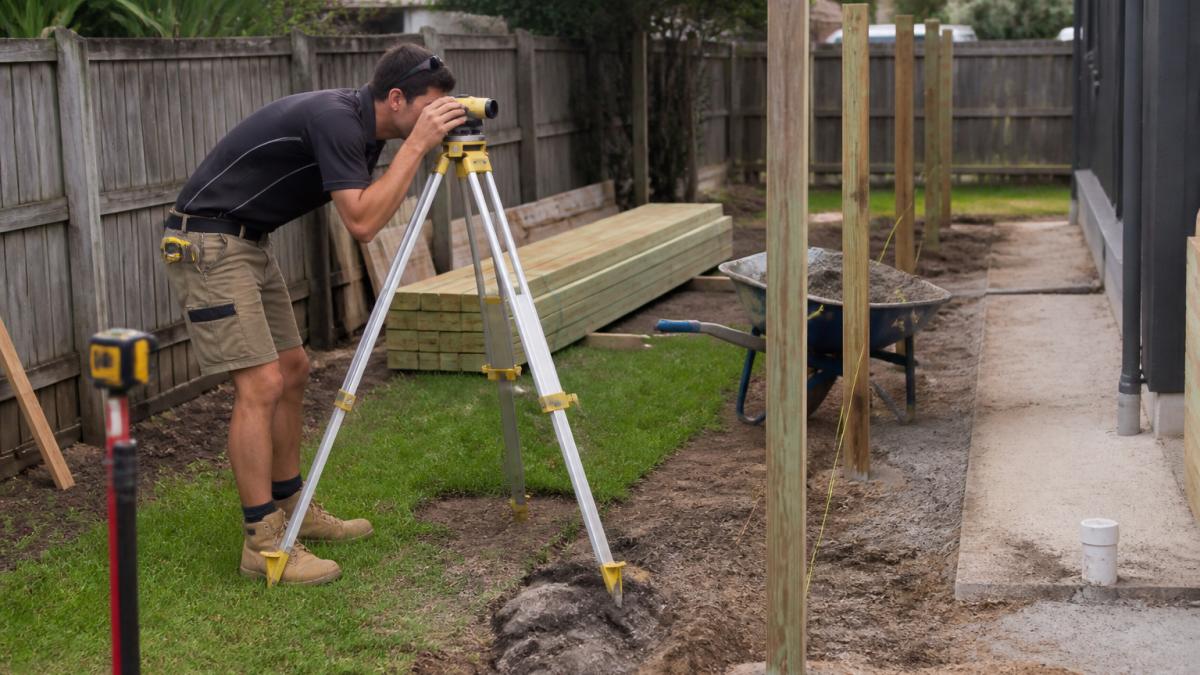
A timber paling fence installation follows a structured sequence that begins well before the first post goes into the ground. Understanding this process shows why professional installation matters.
Site inspection and boundary assessment
Before any materials arrive, a thorough site inspection determines feasibility, identifies complications, and establishes accurate boundary lines, preventing costly mistakes and neighbour disputes.
A site inspection includes measuring the perimeter, identifying utilities (water, electricity, drainage), assessing ground conditions, and noting slopes. Professionals check for underground services using locating equipment; hitting a water pipe or cable creates liability and expense that planning avoids.
Boundary assessment is equally critical. Boundaries aren't always obvious, and incorrect placement creates legal complications and removal costs. Professional installers verify boundaries using title deeds or engage surveyors when uncertainty exists, preventing expensive disputes later.
Material selection and preparation
Once the site is assessed, the right timber species and treatment class are selected based on ground conditions, climate exposure, and intended lifespan. Material choice directly affects durability and maintenance.
Treated pine offers affordability and adequate durability for most residential applications. Hardwood delivers superior longevity and natural resistance to decay and insects, justifying higher initial cost where long-term performance is prioritised.
Treatment classes matter. Posts buried in soil face constant moisture and microbial activity, demanding H3 or H4 depending on ground conditions. Rails and palings experience less exposure and may use lower treatment classes, reducing costs without compromising performance.
Installation and finishing
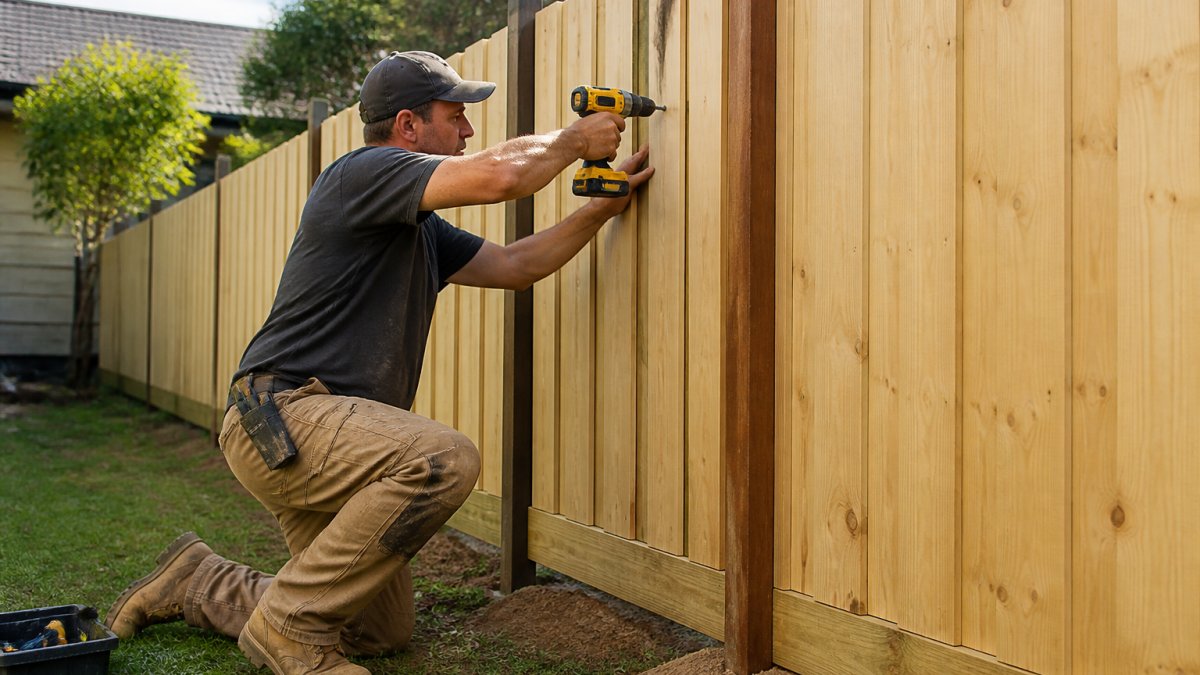
Installation begins with post setting, which determines stability and longevity. Posts must be buried to appropriate depth (typically one-third of total length), set in concrete footings extending below ground level, and aligned precisely.
Once posts are set and concrete cured, rails are attached and palings fixed. Spacing, alignment, and fastening method influence appearance and durability. Professional installers use stainless steel or hot-dipped galvanised fixings; cheap fasteners rust and stain the timber.
Finishing involves applying sealant, stain, or paint to protect the timber and enhance appearance. Often overlooked by DIY installers, it directly affects how long the fence remains attractive and weather-resistant; a quality finish applied immediately can extend lifespan by several years.
Choosing the Right Timber: Species, Treatment, and Durability
Timber species selection shapes initial cost and long-term performance. Understanding treated pine versus hardwood, and what treatment classes mean, lets owners align material choice with priorities and budget.
Treated pine versus hardwood options
Treated pine is the most economical timber fencing option and performs reliably for 15 to 20 years when properly installed and maintained. The softwood is chemically treated to resist decay and insects, and accepts stain and paint readily. For standard exposure and budget constraints, it's a sensible choice.
Hardwood offers natural durability treated pine cannot match. Its density and inherent decay resistance mean it performs well even with minimal maintenance, often exceeding 25 years, and develops an attractive silver-grey patina if left unsealed.
Treated pine suits budget-conscious installations where the owner commits to regular maintenance. Hardwood suits properties where long-term durability and minimal upkeep matter, or where the fence is highly visible.
Treatment classes and weather resistance
Treatment class determines how thoroughly timber is protected against decay and insect attack, ranging from H1 (interior only) to H6 (severe marine exposure). Most residential fencing uses H3 or H4.
H3 timber resists decay and insects in above-ground applications with good ventilation, suiting rails and palings but not posts in ground contact.
H4 timber suits ground contact in most conditions, including posts and below-ground components, protecting against decay and termites where timber contacts soil or remains damp.
H5 and H6 are reserved for severe marine or industrial exposure, rarely needed for residential fencing. Specifying the correct class avoids overpaying or risking premature failure.
Understanding Timber Fence Installation Cost
Timber fencing installation cost depends on multiple factors, and transparent quoting prevents surprise mid-project increases. Understanding cost drivers helps owners evaluate quotes and spot hidden fees.
Factors that influence pricing
Fence length is the primary cost driver: longer fences require more materials and labour, though cost per metre often decreases because setup and mobilisation spread across more linear metres.
Timber species and treatment class affect material cost: treated pine costs less than hardwood, H3 less than H4. Ground conditions influence labour significantly. Level, accessible ground allows faster installation, while sloped terrain, poor soil, rock, or clay adds labour time and sometimes specialist equipment.
Existing fences or structures may need removal before installation. Site access affects labour efficiency; difficult access increases time and cost.
Finishing (sealing, staining, or painting) adds material and labour cost but extends lifespan and improves appearance. Some owners finish the fence themselves to reduce costs.
Hidden costs and transparent quoting
Reputable installers provide itemised quotes separating materials, labour, and finishing costs, revealing where money is spent and allowing informed scope decisions.
Common hidden costs include site cleanup and old fence removal (clarify if included), permits or council approvals, and contingencies for unexpected ground conditions.
Some installers quote per linear metre without specifying timber grade, treatment class, or finishing, inviting misunderstanding. Detailed quotes specify species, treatment class, post spacing, rail configuration, and finishing method, ensuring both parties understand what's delivered.
At AK FENCING VIC PTY LTD, we provide obligation-free quotes that itemise all costs and state assumptions clearly. This approach eliminates surprises and builds confidence that the final invoice matches the agreed scope.
Timber Fence Lifespan: What to Expect
Timber fence lifespan varies by species, treatment, installation quality, and maintenance. Realistic expectations prevent disappointment and guide maintenance decisions.
Treated pine fences typically last 15 to 20 years with regular maintenance (annual inspection, prompt repairs, resealing every 3 to 5 years).
Hardwood fences often exceed 25 years, particularly if sealed initially and maintained periodically; some perform well for 30 years or more.
Installation quality directly affects longevity. Posts set in shallow holes or inadequate concrete fail prematurely, causing the fence to lean or collapse.
Ground conditions influence durability. Poorly draining soil, standing water, or high water tables accelerate decay at ground level. Well-draining and sloped sites that shed water extend timber lifespan compared to flat, wet sites.
Timber Fence Maintenance: Protecting Your Investment
Maintenance is the difference between a timber fence that lasts decades and one that deteriorates within a few years. Regular attention prevents small problems becoming costly failures.
Regular cleaning and inspection
Annual inspection identifies problems early, when repairs are simple and inexpensive. Walk the fence line looking for soft spots in posts (indicating decay), loose palings, rusted fasteners, or worn finish.
Cleaning removes dirt, algae, and debris that trap moisture and accelerate decay. A gentle wash with water and mild detergent, followed by thorough drying, removes contaminants. Avoid high-pressure cleaning, which damages the surface and drives water into the wood.
Inspect fasteners for corrosion. Replace rusted bolts or nails with stainless steel or hot-dipped galvanised alternatives to prevent rust stains and structural weakness.
Sealing, staining, and repairs
Resealing or restaining every 3 to 5 years protects timber from UV damage and moisture penetration. Quality sealers form a barrier that slows weathering and keeps the fence looking fresh. The interval depends on climate exposure and product; south-facing fences in high-sun areas may need more frequent resealing than sheltered locations.
Repairs should be addressed promptly. A cracked paling can be replaced without removing the entire fence; a soft or rotting post may be sistered (reinforced with a new post alongside it) or replaced entirely. Early repair prevents damage spreading and keeps costs manageable.
Timber preservative can arrest early-stage rot before damage becomes structural, but once decay is advanced, replacement is the only reliable solution.
Permits, Boundaries, and Neighbour Responsibilities
Fence installation involves legal and regulatory considerations that vary by council and property type. Understanding them prevents costly removal or disputes.
Most councils require permits for fences exceeding certain heights.
Boundary responsibility varies by council and local custom. Before installation, clarify whether the fence will be shared or sole responsibility; written agreement prevents future disputes.
Easements or rights-of-way may restrict fence placement or height; title deeds clarify these. Placing a fence across an easement without consent can result in forced removal.
Contacting the council's planning department before design and installation confirms permit requirements, height restrictions, and special conditions, preventing costly corrections after installation.
Professional Installation: Why It Matters
The difference between a durable timber fence and one that fails prematurely often comes down to installation quality. Professional installers bring experience, proper equipment, and accountability DIY approaches cannot match.
Professional installers understand how ground conditions affect post stability and choose appropriate depth and concrete specifications.
Experience with local conditions, soil types, drainage patterns, and wind exposure informs material selection and design.
Accountability matters. Licensed and insured installers carry professional indemnity and public liability insurance, protecting you if something goes wrong. A workmanship guarantee gives confidence the fence will perform as promised.
At AK FENCING VIC PTY LTD, our fully licensed and insured team brings years of experience installing durable timber fencing across residential and commercial properties. Contact us for a free quote and discover how professional timber fencing installation protects and enhances your property.
Timber fencing installation is an investment in property security, privacy, and aesthetics.
Frequently Asked Questions
What is the lifespan of a timber fence?
A well-maintained timber fence typically lasts 15 to 20 years, depending on timber species, treatment class, and local climate conditions. Treated pine generally lasts 10 to 15 years, whilst hardwood varieties can exceed 20 years. Regular maintenance, including sealing and staining every 2 to 3 years, significantly extends lifespan and prevents rot, weathering, and insect damage.
How much does timber fence installation cost?
Timber fence installation cost depends on fence length, timber species, treatment class, site conditions, and labour complexity. Treated pine is generally more affordable than hardwood, whilst difficult terrain or poor soil conditions may increase costs. Obtain a free, obligation-free quote from a licensed installer who provides transparent, itemised pricing without hidden charges for unforeseen ground conditions.
Which timber is best for a durable fence?
Hardwoods such as spotted gum and ironbark offer superior durability and naturally resist rot and insects, making them ideal for long-term installations. Treated pine provides good value and durability when properly treated to the correct treatment class (H3 or H4 for ground contact). Choose based on your budget, desired lifespan, and aesthetic preference; professional installers can advise on the best option for your property.
How can I make a timber fence last longer?
Regular maintenance is essential for longevity. Seal or stain your timber fence every 2 to 3 years to protect against moisture, UV damage, and weathering. Inspect posts and palings annually for signs of rot, insect damage, or loose fasteners, and repair damage promptly. Ensure proper drainage around fence posts and keep vegetation trimmed away from the fence line to reduce moisture retention and pest activity.
Does my neighbour have to pay for half the fence in Victoria?
In Victoria, fence costs are not automatically shared with neighbours unless there is a formal agreement or legal arrangement. The property owner who initiates the fence typically bears the full cost. However, you can propose cost-sharing with your neighbour; if they agree, put the arrangement in writing. If disputes arise, consult the Neighbourhood Dispute Resolution Act 2011 or seek legal advice.
How long does timber fence installation take?
Installation timeline depends on fence length, site conditions, and complexity. A typical residential timber fence of 50 metres may take 2 to 5 days, whilst larger or more challenging projects may require longer. Poor soil, uneven terrain, or difficult access can extend the timeline. Your installer should provide a realistic timeframe during the initial consultation and keep you informed of any delays.